




 BOM
 Cart
 Product Catalog
The ADS1015 is a precision, low-power, 12-bit analog-to-digital converter (ADC) developed by Texas Instruments (TI). It is designed to convert analog signals into digital data that can process by microcontrollers and embedded systems. With its I2C-compatible interface, programmable gain amplifier (PGA), and flexible input multiplexer (MUX), the ADS 1015 is a popular solution for sensor measurement and data acquisition projects.
Whether you are developing an Arduino project, monitoring battery voltage, measuring temperature, or building an industrial control system, the ADS 1015 provides a compact and efficient way to add analog input capabilities to your design.
In this guide, we will explore the ADS 1015 overview, specifications, pinout, features, applications, comparison with the ADS1115, and development board options.
7. ADS1015 12 Bit Analog to Digital Development Board ADC Converter Module
8. Frequently Asked Questions [FAQ]
ADS1015 Overview
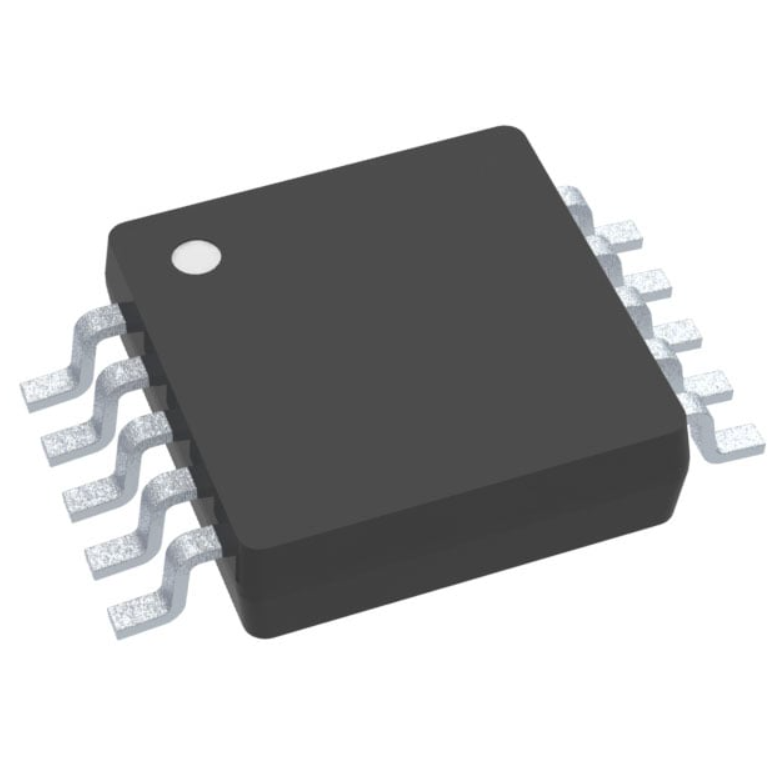
The ADS1015 belongs to the ADS101x family of precision analog-to-digital converters, which includes the ADS1013, ADS1014. These devices feature 12-bit resolution, low power consumption, an internal voltage reference, and an oscillator.
The ADS 1015 include a programmable gain amplifier (PGA) and a digital comparator, making them suitable for applications that require accurate signal measurements and voltage monitoring.
The component stands out because it provides a flexible input multiplexer that supports four single-ended or two differential input measurements. This allows users to connect multiple analog sensors without requiring additional ADC hardware.
It communicates with microcontrollers through an I2C interface and supports data rates of up to 3300 samples per second (SPS).
Another important feature is its programmable gain amplifier, which provides selectable input ranges from ±256mV to ±6.144V. This allows the ADC to measure both small and relatively large signals with improved measurement flexibility.
ADS1015 Specification
The ADS 1015 is manufactured by Texas Instruments and is available in compact surface-mount packages. Its combination of resolution, sampling speed, and input flexibility makes it suitable for a wide range of applications.
The following table summarizes its main technical specifications.
Parameter | Specification |
Manufacturer | Texas Instruments |
Packaging | Tape & Reel (TR) |
Resolution | 12 bits |
Maximum Sampling Rate | 3.3 kSPS |
Number of Inputs | 2 differential or 4 single-ended |
Input Type | Differential, Single-ended |
Data Interface | I2C |
Configuration | MUX-PGA-ADC |
Programmable Gain Amplifier | Yes |
Internal Reference | Yes |
Internal Oscillator | Yes |
Supply Voltage | 2.0V–5.5V |
Current Consumption | 150µA (continuous-conversion mode) |
Operating Temperature | -40°C to +125°C |
Mounting Type | Surface Mount |
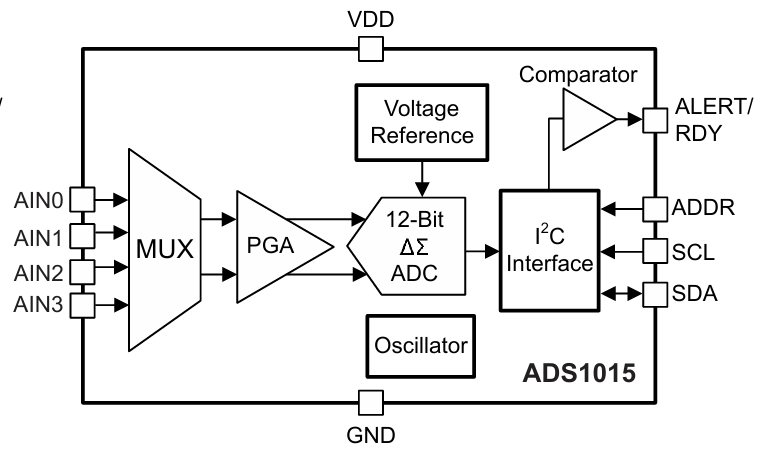
The ADS1015 integrates a multiplexer, programmable gain amplifier, and ADC into a single device. This configuration reduces the need for external analog signal-conditioning components and simplifies hardware design.
ADS1015 Pinout
Understanding the ADS1015’s pinout is essential when connecting the ADC to a microcontroller or external analog sensors.
The ADS 1015 is available in a 10-pin package. Each pin has a specific function related to power, analog input, or I2C communication.
ADS1015 Pin Configuration
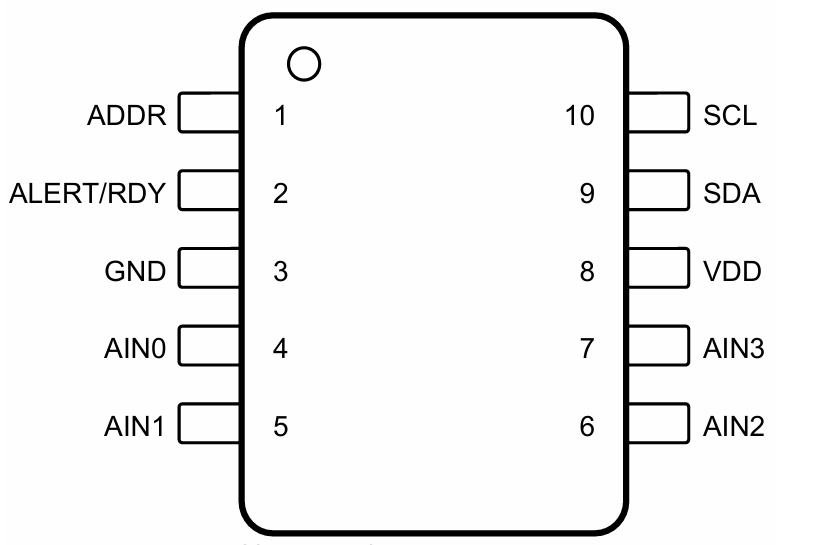
Pin | Name | Type | Description |
1 | ADDR | Digital Input | I2C target address selection |
2 | ALERT/RDY | Digital Output | Comparator output or conversion-ready signal |
3 | GND | Analog | Ground connection |
4 | AIN0 | Analog Input | Analog input channel 0 |
5 | AIN1 | Analog Input | Analog input channel 1 |
6 | AIN2 | Analog Input | Analog input channel 2 |
7 | AIN3 | Analog Input | Analog input channel 3 |
8 | VDD | Analog | Power supply |
9 | SDA | Digital I/O | I2C serial data input and output |
10 | SCL | Digital Input | I2C serial clock input |
Important pin descriptions:
ADDR: Selects the I2C address of the device. Connecting this pin to different supported address levels allows multiple ADS 1015 devices to share the same I2C bus.
AIN0–AIN3: Four analog input pins used for single-ended or differential measurements.
SDA: Transfers data between the ADS1015 and the microcontroller.
SCL: Provides the clock signal for I2C communication.
ALERT/RDY: Provides comparator alerts or indicates when a conversion is ready.
VDD: Supplies operating voltage to the ADC. A 0.1µF decoupling capacitor should connect between VDD and GND.
ADS1015 Block Diagram
ADS1015 Features
The circuit offers several features that make it useful for compact and low-power electronic systems.
12-Bit Resolution
The ADS1015 provides 12-bit analog-to-digital conversion, allowing it to represent an analog input using 4096 possible digital levels.
This resolution is useful for measuring sensor outputs, battery voltage, and other analog signals that require more precision than a typical 10-bit microcontroller ADC.
Wide Supply Voltage Range
The device operates with a supply voltage ranging from 2.0V to 5.5V. This makes it compatible with many low-voltage embedded systems.
Low Power Consumption
With a typical current consumption of approximately 150µA in continuous-conversion mode, the ADS 1015 is suitable for battery-powered applications and portable instrumentation.
Programmable Data Rate
The ADS 1015 supports programmable data rates from 128 SPS to 3300 SPS.
Users can select a suitable sampling rate depending on the application. Lower sampling rates may be useful for slower sensor measurements, while higher rates support faster signal monitoring.
Programmable Gain Amplifier
The integrated PGA offers selectable full-scale input ranges.
The PGA allows small analog signals to be measured with greater effective resolution.
Note that the selected PGA range does not override the device's absolute input voltage limits. The analog input pins must remain within the permitted supply and input ratings.
I2C Communication Interface
The ADS 1015 uses a two-wire I2C interface consisting of SDA and SCL. It supports four selectable I2C addresses, allowing multiple devices to operate on the same bus.
Compact Package Design
The ADS101x family is available in ultra-small packages, including:
· X2QFN: 1.5mm × 2mm × 0.4mm.
· SOT: 2.9mm × 2.8mm × 0.6mm.
· VSSOP: 10-pin package.
Operating Temperature Range
The ADS 1015 supports an operating temperature range of -40°C to +125°C, making it suitable for many industrial and commercial environments.
ADS101x Family Comparison
Feature | ADS1013 | ADS1014 | ADS1015 |
Resolution | 12-bit | 12-bit | 12-bit |
Analog Inputs | 1 | 1 | 4 |
Differential Inputs | Yes | Yes | 2 |
PGA | No | Yes | Yes |
Digital Comparator | No | Yes | Yes |
I2C Interface | Yes | Yes | Yes |
The ADS1015 is particularly useful when require multiple analog input channels.
ADS1015 Applications
Because of its low power consumption, flexible input configuration, and I2C interface, the ADS 1015 is suitable for different electronic measurement applications.
Portable Instrumentation
Can integrate into portable measurement devices to monitor analog sensor outputs. Its compact size and low power consumption make it suitable for handheld instruments.
Battery Voltage and Current Monitoring
The ADC can measure battery voltage through an appropriately designed voltage divider. With a suitable current-sensing circuit, it can also monitor current through a shunt resistor.
These measurements are useful in battery management and power monitoring systems.
Temperature Measurement Systems
The compinent can interface with analog temperature sensors and convert their output voltages into digital measurements for processing by a microcontroller.
Consumer Electronics
Can use in smart home devices, electronic appliances, portable equipment, and other consumer products that require analog signal acquisition.
Factory Automation and Process Control
In industrial systems, the circuit can monitor sensor outputs, voltage levels, and process parameters. Its comparator function can also help detect programmable under-voltage and over-voltage conditions.
ADS1015 vs ADS1115
The ADS1015 and ADS1115 are two popular analog-to-digital converters manufactured by Texas Instruments. Both devices use an I2C interface and provide four single-ended or two differential input channels.
However, the main difference is their resolution and conversion speed.
The ADS1015 offers 12-bit resolution with a maximum sampling rate of 3300 SPS, while the ADS1115 provides 16-bit resolution with a maximum sampling rate of 860 SPS.
ADS1015 vs ADS1115 Specifications
Parameter | ADS1015 | ADS1115 |
Manufacturer | Texas Instruments | Texas Instruments |
Resolution | 12 bits | 16 bits |
Maximum Sampling Rate | 3300 SPS | 860 SPS |
Number of Inputs | 4 single-ended / 2 differential | 4 single-ended / 2 differential |
Input Type | Differential, Single-ended | Differential, Single-ended |
Data Interface | I2C | I2C |
Configuration | MUX-PGA-ADC | MUX-PGA-ADC |
Architecture | Delta-Sigma | Delta-Sigma |
Reference Type | Internal | Internal |
Analog Supply | 2.0V–5.5V | 2.0V–5.5V |
Digital Supply | 2.0V–5.5V | 2.0V–5.5V |
PGA | Yes | Yes |
Selectable I2C Address | Yes | Yes |
Operating Temperature | -40°C to +125°C | -40°C to +125°C |
Package | 10-pin packages | 10-pin packages |
Mounting Type | Surface Mount | Surface Mount |
Main Differences Between ADS1015 and ADS1115
Resolution
The ADS1015 has 12-bit resolution, providing 4096 possible output levels. In comparison, the ADS1115 has 16-bit resolution, providing 65,536 possible output levels.
Therefore, the ADS1115 is better suited for applications that require finer measurement resolution.
Sampling Rate
The ADS1015 supports sampling rates up to 3300 SPS, while the ADS1115 supports up to 860 SPS.
This makes the ADS1015 a better option when faster conversion is more important than higher resolution.
Measurement Applications
The ADS1015 is suitable for faster sensor monitoring, battery measurements, and general-purpose analog data acquisition.
The ADS1115 is more suitable for applications requiring higher-resolution measurements, such as precision temperature monitoring and low-level sensor measurements.
Which One Should You Choose?
Requirement | Recommended ADC |
Higher resolution & More precise low-level measurements | ADS1115 |
Faster sampling rate & Basic sensor monitoring | ADS1015 |
General Arduino projects | Both |
Battery monitoring | Both |
In summary, choose the ADS1015 if you need faster sampling and sufficient 12-bit resolution. Choose the ADS1115 if measurement precision is your main priority.
ADS1015 12-Bit Analog-to-Digital Development Board ADC Converter Module for Arduino
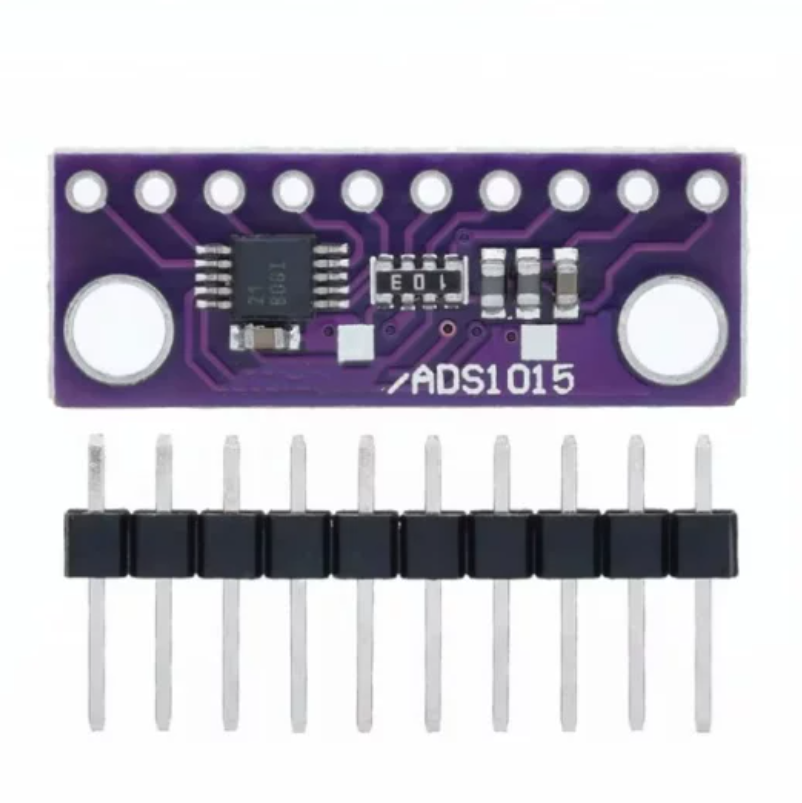
The ADS 1015 development board is a convenient solution for adding analog input channels to Arduino, Raspberry Pi, ESP32, and other microcontroller-based projects.
These breakout boards typically operate with 2V to 5V power and logic signals, making them compatible with many common 3.3V and 5V microcontrollers, subject to the board's actual circuit design and I2C pull-up voltage.
The ADS1015 and ADS1115 development boards are similar in appearance and functionality, but their conversion performance differs.
The ADS1015 provides 12-bit resolution and faster conversion speeds, whereas the ADS1115 provides 16-bit resolution and slower conversion speeds.
Key Development Board Features
· Four single-ended analog input channels.
· Two differential input channels.
· I2C communication interface.
· Programmable gain amplifier with up to 16× gain.
· Compatible with common Arduino and Raspberry Pi projects.
· Supports multiple I2C addresses.
· Compact PCB design for easy integration.
Multiple ADC Boards on One I2C Bus
The ADS 1015 has four selectable I2C addresses. This allows up to four devices to share a single I2C bus when each device is configured with a different address.
With four ADS 1015 boards, users can access up to:
· 16 single-ended analog input channels.
· 8 differential input channels.
This makes the module useful for projects that require multiple sensor inputs without using several microcontroller ADC pins.
Example Applications with Arduino
Can use the ADS 1015 with Arduino to measure:
· Potentiometer output voltage.
· Analog temperature sensor signals.
· Light sensor outputs.
· Battery voltage.
· Analog pressure sensor signals.
· Various low-voltage sensor outputs.
The Arduino communicates with the module through the I2C interface, making hardware connections relatively simple.
Frequently Asked Questions [FAQ]
How many channels are there in ADS1115?
The ADS1115 has four analog input pins. It supports four single-ended input measurements or two differential input measurements.
How many pins do ADS1115 and ADS1015 have?
Both the ADS1115 and ADS1015 are available in 10-pin packages, including VSSOP-10 packages.
Their breakout boards may have additional header pins for convenient connections.
Can ADS1115 read negative voltage?
Yes. The ADS1115 supports differential input measurements, which allow it to measure a negative differential voltage when the voltage at the negative input is higher than the voltage at the positive input.
However, this does not mean that its input pins can accept arbitrary negative voltages relative to ground. The input pins must remain within the device's permitted voltage limits.
How do I connect my Raspberry Pi to ADS1015?
The ADS 1015 can communicate with a Raspberry Pi through its I2C interface.
A typical connection is:
ADS1015 Pin | Raspberry Pi Pin |
VDD | 3.3V |
GND | GND |
SDA | GPIO2 (Pin 3) |
SCL | GPIO3 (Pin 5) |
Connect the analog sensor output to one of the ADS 1015 analog input pins.
Make sure the breakout board's I2C pull-up resistors are connected to 3.3V when used with a Raspberry Pi to avoid exposing its GPIO pins to 5V.
What is the difference between ADS1015 and ADS1115?
The main difference is their resolution and maximum sampling rate.
· ADS 1015: 12-bit resolution and up to 3300 SPS.
· ADS1115: 16-bit resolution and up to 860 SPS.
The ADS 1015 is faster, while the ADS1115 offers higher resolution.
What is the operating voltage of ADS1015?
The ADS 1015 operates with a supply voltage between 2.0V and 5.5V.
Does ADS1015 support I2C communication?
Yes. The ADS 1015 uses an I2C interface with four selectable device addresses, allowing multiple ADC modules to communicate with the same microcontroller.
Can ADS1015 measure temperature?
Yes. The ADS 1015 can measure the analog output voltage of compatible temperature sensors and convert it into digital data for temperature calculations.
Conclusion
The ADS1015 is a compact, low-power, 12-bit analog-to-digital converter that provides a practical solution for adding analog measurement capabilities to microcontroller-based systems.
Its four single-ended or two differential input channels, programmable gain amplifier, internal voltage reference, and I2C interface make it suitable for a wide range of sensor measurement and data acquisition applications.
Compared with the ADS1115, the ADS 1015 offers a higher maximum sampling rate but lower resolution. This makes it a good choice for applications where conversion speed and multiple analog inputs are more important than achieving 16-bit measurement resolution.
Whether used in Arduino projects, Raspberry Pi systems, battery monitoring circuits, or industrial measurement equipment, the ADS 1015 provides a flexible and efficient ADC solution for modern embedded electronics.
Read More:
1. AS5600 Magnetic Encoder: Pinout, Arduino Code & Sensor Module
2. HX711 Load Cell Amplifier Module: Weight Sensor Guide
3. PCA9685 16-Channel 12-Bit PWM Servo Driver Module Guide
Datasheet:
HOT NEWS
TP4056 Charging Module Pinout, Working, and Applications
TP4056 Charging Module Pinout, Working, and Applications
2026-01-23
Understanding The CD4051 Analog Multiplexer
CD4051 analog multiplexer
2025-06-30
LR41 Battery Guide: Specifications, Equivalents, and Uses
LR41 Battery Specifications, Equivalents, and Uses
2025-12-14
Understanding A 0603 Resistor
0603 resistor,dimensions,marking code, values
2025-05-29
Mini MP1584 DC-DC 3A Buck Converter Module: Complete Guide
Mini MP1584 DC-DC 3A Buck Converter Module: Complete Guide
2026-03-26
TTP223 Touch Switch - Pinout, Datasheet & Applications
TTP223 Touch Switch - Pinout, Datasheet & Applications
2026-02-11
MT3608 Boost Converter - An In-Depth Guide
MT3608 Boost Converter
2025-09-04
Guide To The XL6009 Boost Converter
XL6009 Boost Converter
2025-09-05
The 0402 Resistor: A Comprehensive Guide
0402 Resistor
2025-05-06
BPW34 Photodiode: Datasheet, Pinout, and Alternative
BPW34 Photodiode: Datasheet, Pinout, and Alternative
2026-03-27