




 BOM
BOM Cart
Cart Product Catalog
The RFM95W LoRa module is a high-performance long-range wireless transceiver. Based on LoRa™ spread spectrum modulation technology, the RFM95 W provides excellent sensitivity, strong interference immunity, and ultra-low power operation. It can achieve a receiver sensitivity of up to -148dBm and supports a maximum output power of +20dBm (100mW), allowing reliable communication over several kilometers depending on the environment and antenna configuration.
The RFM 95W widely use in IoT applications such as smart meters, environmental monitoring, wireless security systems, industrial control, and smart agriculture. With its compact 16mm × 16mm module size, SPI communication interface, and compatibility with popular microcontrollers including Arduino, ESP32, and STM32, the module offers an easy solution for developers building long-range wireless devices.
This article will introduce the RFM 95W LoRa module, including its working principle, pinout, specifications, key features, equivalent modules, applications, frequency versions, and frequently asked questions.
3. RFM95W Equivalent and Alternative
8. Frequently Asked Questions [FAQ]
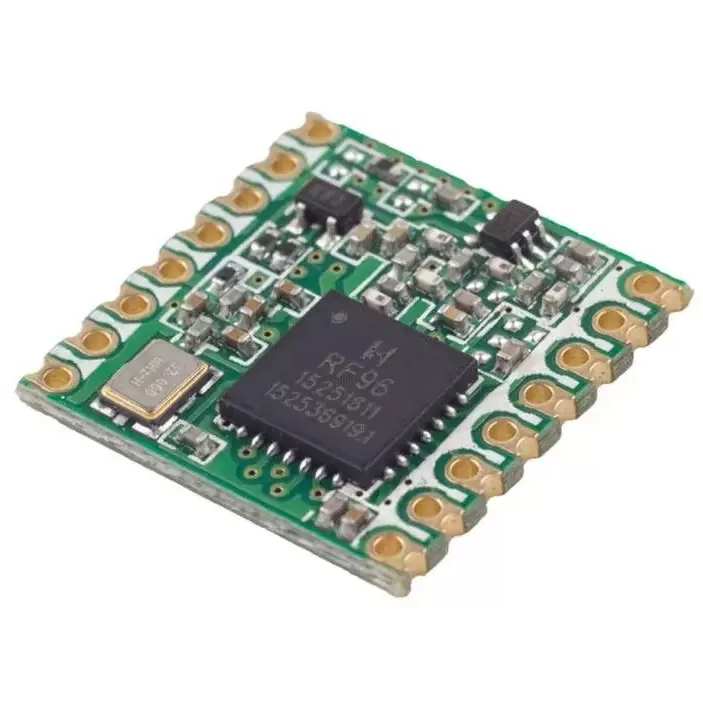
What is RFM95W LoRa Module?
The RFM 95W is a low-power long-range wireless transceiver module based on the Semtech SX1276/SX1278 LoRa technology. It integrates the LoRa™ long-range spread spectrum modem, providing ultra-long-distance communication, high interference immunity, and low power consumption for wireless applications.
The RFM95W uses HopeRF’s patented LoRa™ modulation technology to achieve extremely high receiver sensitivity of up to -148dBm. Combined with an integrated +20dBm (100mW) power amplifier, the module provides an industry-leading link budget, making it suitable for applications that require long communication distance, strong signal reliability, and low energy consumption.
Unlike traditional RF communication methods, LoRa modulation improves the balance between transmission range, interference resistance, and power efficiency. The RFM95W offers excellent blocking immunity and selectivity, allowing reliable communication even in environments with significant wireless interference.
The module also supports multiple digital modulation modes, including FSK, GFSK, MSK, GMSK, and OOK, making it suitable for various wireless systems such as smart meters, industrial monitoring, and IoT networks.
With its compact 16mm × 16mm surface mount package, can easily integrate the RFM 95W into embedded systems, Arduino projects, LoRa gateways, and battery-powered IoT devices.
RFM95W Pinout
The module provides an SPI interface for communication with microcontrollers such as Arduino, STM32, ESP32, and Raspberry Pi. It also includes multiple configurable digital I/O pins for LoRa events and control functions.
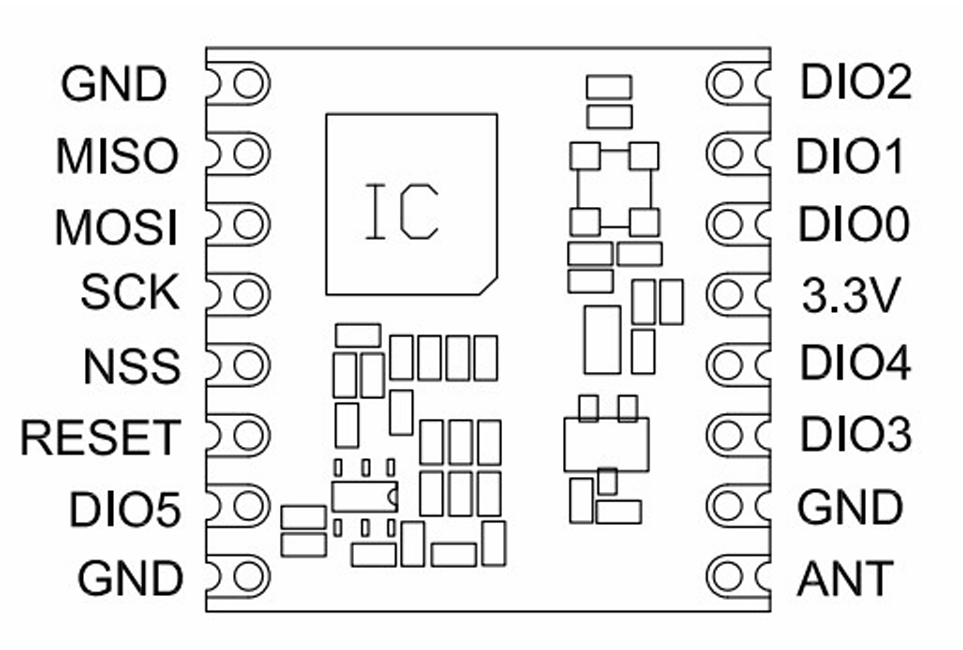
Pin No | Pin Name | Type | Description |
1 | GND | Power | Ground connection |
2 | MISO | I/O | SPI data output |
3 | MOSI | I/O | SPI data input |
4 | SCK | Input | SPI clock input |
5 | NSS | Input | SPI chip select |
6 | RESET | I/O | Reset trigger input |
7 | DIO5 | I/O | Software configurable digital I/O |
8 | GND | Power | Ground connection |
9 | ANT | RF | RF signal input/output |
10 | GND | Power | Ground connection |
11 | DIO3 | I/O | Software configurable digital I/O |
12 | DIO4 | I/O | Software configurable digital I/O |
13 | 3.3V | Power | Supply voltage input |
14 | DIO0 | I/O | Software configurable digital I/O |
15 | DIO1 | I/O | Software configurable digital I/O |
16 | DIO2 | I/O | Software configurable digital I/O |
RFM95W SPI Interface
The RFM 95W communicates with a host controller through the SPI bus:
· MOSI: Data sent from MCU to RFM95W
· MISO: Data sent from RFM95W to MCU
· SCK: SPI clock signal
· NSS: Chip selection control
The SPI interface allows fast configuration of LoRa parameters, packet transmission, frequency settings, and power management functions.
RFM95W Equivalent and Alternative Modules
The RFM 95W is a LoRa wireless transceiver module based on Semtech’s LoRa technology. Depending on frequency requirements, application environment, and regional wireless regulations, can use several alternative modules as replacements. These modules provide similar long-range communication capabilities but operate at different frequency bands.
SX1278 LoRa Module (433MHz / 470MHz)
The SX1278 LoRa module is one of the most popular alternatives to the RFM95W. Based on the Semtech SX1278 chip and widely use in long-range wireless communication applications.
The SX1278 operates mainly at 433MHz and 470MHz frequency bands, which can provide better signal penetration and communication performance in certain environments compared with higher-frequency LoRa modules.
The module supports LoRa spread spectrum modulation, SPI communication, up to +20dBm transmit power, and receiver sensitivity of up to -148dBm. Commonly used in Arduino LoRa projects, wireless sensor networks, smart agriculture systems, and industrial monitoring applications.
RFM96W (433MHz)
The RFM96W is a 433MHz version of the RFM95W LoRa module. It uses HopeRF LoRa technology and provides similar performance characteristics, including long-range communication, high sensitivity, and low power consumption.
The main difference between the RFM95W and RFM96W is the operating frequency. The RFM95W is designed for 868MHz and 915MHz applications, while the RFM96W operates at 433MHz.
The RFM96W is suitable for applications that require reliable long-distance communication at the 433MHz frequency band, including remote sensors, telemetry systems, and wireless monitoring devices.
RFM98W (433MHz)
The RFM98W is another HopeRF LoRa transceiver module designed for 433MHz communication. It provides similar LoRa features as the RFM95W and RFM96W, including high receiver sensitivity, low power operation, and SPI communication.
Can use the RFM98W as an alternative solution when require a 433MHz LoRa module. Suitable for IoT devices, industrial control systems, environmental monitoring, and other long-range wireless applications.
When selecting an alternative to the RFM 95W, the operating frequency is the most important factor to consider. The SX1278, RFM96W, and RFM98W are suitable choices for 433MHz LoRa applications, while the RFM95W 868MHz/915MHz versions are commonly used in regions such as Europe, North America, and other areas that support these frequency bands.
RFM95W Specifications
Table
Parameter | Value |
Module Type | LoRa Wireless Transceiver |
RF Technology | LoRa™, FSK, GFSK |
Frequency Range | 868MHz / 915MHz |
Sensitivity | Up to -148dBm |
Maximum Output Power | +20dBm (100mW) |
Supply Voltage | 1.8V ~ 3.7V |
Interface | SPI |
Data Rate | Up to 300kbps |
Receive Current | 10.8mA ~ 12.1mA |
Transmit Current | 20mA ~ 120mA |
Modulation | LoRa, FSK, GFSK, GMSK, MSK, OOK |
Operating Temperature | -20°C ~ +70°C |
Antenna Type | External antenna required |
Mounting Type | Surface Mount |
Package | 16-SMD Module |
Module Size | 16mm × 16mm |
RF Output Power | +20dBm |
Applications of RFM95W LoRa Module
The RFM 95W is widely used in IoT and wireless communication systems requiring long-distance transmission and low power consumption.
Automated Meter Reading
Used in smart meters for electricity, water, and gas monitoring. Its long communication range allows meters to send data without complex network infrastructure.
Home and Building Automation
RFM 95W modules can connect smart home devices such as:
· Smart sensors
· Lighting controllers
· Security systems
· Environmental monitoring devices
Wireless Alarm and Security Systems
The high sensitivity and interference resistance make it suitable for:
· Remote alarms
· Security sensors
· Emergency monitoring systems
Industrial Monitoring and Control
Industrial applications include:
· Machine monitoring
· Remote equipment control
· Factory automation
· Wireless sensor networks
Long-Range Irrigation Systems
LoRa communication enables agricultural systems to monitor:
· Soil moisture
· Water pumps
· Weather sensors
· Irrigation controllers
RFM95W Features
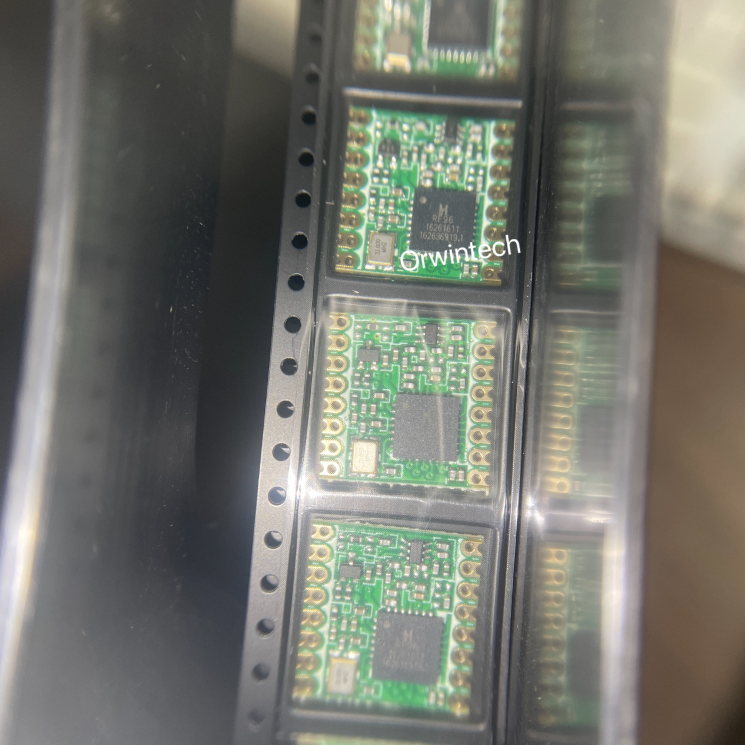
The LoRa module provides many features for long-range and low-power wireless communication.
Long Range LoRa Modem
The integrated LoRa modem enables ultra-long-distance communication with excellent sensitivity and interference resistance. It can achieve sensitivity as low as -148dBm, allowing reliable data transmission over large distances.
High Output Power
The built-in power amplifier provides a constant +20dBm RF output power, equivalent to 100mW. This improves communication distance and signal reliability.
High Link Budget
The RFM 95W supports a maximum link budget of 168dB, which helps maintain stable communication in challenging environments.
Low Power Consumption
The module is designed for battery-powered IoT applications.
Features include:
· Low receiver current around 10.3mA
· 200nA register retention current
· Multiple sleep modes for energy saving
Multiple Modulation Support
The RFM 95W supports:
· LoRa™
· FSK
· GFSK
· MSK
· GMSK
· OOK
This makes the module compatible with different wireless communication systems.
Advanced RF Performance
The module provides:
· Excellent blocking immunity
· High receiver linearity
· IIP3 performance of -12.5dBm
· 127dB RSSI dynamic range
· Built-in temperature sensor
· Low battery detection
Flexible Data Rate
The programmable data rate can reach up to 300kbps, allowing users to balance communication speed and transmission range.
Packet Processing
The built-in packet engine supports:
· Packet length up to 256 bytes
· CRC error checking
· Preamble detection
· Automatic RF signal detection
RFM95W 868S2 VS 915S2
The RFM95W LoRa module is available in different frequency versions, with the most common variants being RFM95W 868S2 and RFM95W 915S2. Both versions use the same LoRa modulation technology and provide similar performance, including high sensitivity, low power consumption, and long-range wireless communication. The main difference between them is the operating frequency band, which determines the suitable application region and regulatory compatibility.
RFM95W 868S2 (868MHz)
The RFM95W 868S2 operates at the 868MHz frequency band and is commonly used in regions such as Europe and parts of Asia. Designed for LoRaWAN and IoT applications that follow 868MHz frequency regulations.
The 868MHz version provides excellent communication range, strong interference resistance, and low power consumption. Widely used in smart meters, environmental monitoring, industrial sensors, and wireless control systems.
RFM95W 915S2 (915MHz)
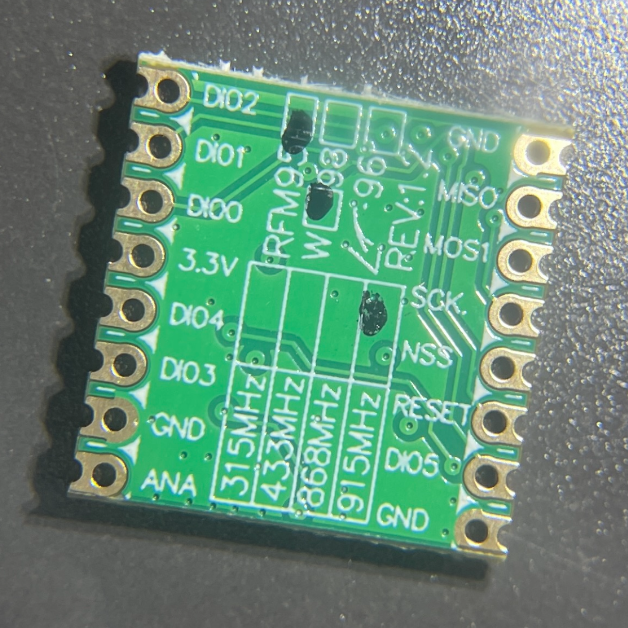
The RFM 95W 915S2 operates at the 915MHz frequency band and mainly use in North America, Australia, and other regions that support the 915MHz ISM band.
It provides the same LoRa features as the 868MHz version, including up to +20dBm output power, -148dBm sensitivity, and SPI communication. The 915MHz version commonly use in IoT gateways, agricultural monitoring systems, remote sensors, and industrial wireless networks.
Which RFM95W Version Should You Choose?
The choice between RFM 95W 868S2 and 915S2 mainly depends on local frequency regulations and network compatibility.
The 868S2 is a better choice for regions using the 868MHz ISM band, especially European LoRaWAN networks.
The 915S2 is recommended for regions using the 915MHz ISM band, including North America and Australia.
Both versions provide similar LoRa communication performance. Selecting the correct frequency version and using a properly matched antenna are important for achieving the best communication range and reliability.
RFM95W Datasheet
The RFM 95W datasheet provides detailed technical information including. You can check the data sheet for more detailed technical information before designing your hardware.
Frequently Asked Questions [FAQ]
What is RFM95W price?
The price of the RFM95W LoRa module depends on the supplier, frequency version, and order quantity. Generally, the module costs around $3 to $15 USD for individual purchases. Bulk orders from manufacturers or distributors usually offer lower prices.
What is the range of the LoRa RFM95W?
The RFM95W LoRa module can achieve a communication range of several kilometers depending on antenna quality, transmission power, data rate, and environment. In open areas with proper antennas, it can typically reach 5–15km, while urban range is usually shorter.
What does a LoRa module do?
A LoRa module enables long-range wireless communication between electronic devices by converting digital data into LoRa radio signals. It provides low-power, reliable data transmission for IoT applications such as sensors, smart meters, agriculture monitoring, and industrial control systems.
Which LoRa module has the longest range?
LoRa modules using high-sensitivity chips such as SX1276, SX1278, SX1262, and SX1268 can achieve long ranges. The RFM95W is also a long-range module with -148dBm sensitivity and excellent link budget for reliable communication.
What is the maximum distance for LoRa?
The maximum LoRa communication distance depends on frequency, antenna height, transmit power, and environmental conditions. Under ideal conditions with clear line-of-sight and optimized antennas, LoRa can achieve distances exceeding 15km and in some cases much farther.
Is LoRa 2.4 GHz?
Traditional LoRa modules, including the RFM95W, do not operate at 2.4GHz. They mainly use sub-GHz frequency bands such as 433MHz, 470MHz, 868MHz, and 915MHz. Newer LoRa solutions are available at 2.4GHz, but they are different devices.
What are the limitations of LoRa radio?
LoRa provides excellent range and low power consumption, but it has limitations. It offers a lower data rate compared with Wi-Fi or Bluetooth, making it unsuitable for high-bandwidth applications. Range can also be affected by obstacles, interference, antenna design, and regulations.
Conclusion
The RFM95W LoRa module is a powerful long-range wireless transceiver designed for IoT, industrial monitoring, smart agriculture, and low-power wireless applications. With -148dBm sensitivity, +20dBm output power, 168dB link budget, and low power consumption, it provides reliable communication over long distances.
Its SPI interface, compact size, and support for multiple modulation modes make it easy to integrate with popular microcontrollers such as Arduino, ESP32, and STM32. For applications requiring long-range wireless connectivity with minimal power consumption, the RFM95W is an excellent choice.
Read More:
1. SX1278 LoRa RF Module: Features, Pinout & Arduino Setup
HOT NEWS
TP4056 Charging Module Pinout, Working, and Applications
TP4056 Charging Module Pinout, Working, and Applications
2026-01-23
LR41 Battery Guide: Specifications, Equivalents, and Uses
LR41 Battery Specifications, Equivalents, and Uses
2025-12-14
Understanding The CD4051 Analog Multiplexer
CD4051 analog multiplexer
2025-06-30
Understanding A 0603 Resistor
0603 resistor,dimensions,marking code, values
2025-05-29
MT3608 Boost Converter - An In-Depth Guide
MT3608 Boost Converter
2025-09-04
Complete Guide to the 220 Ohm Resistor
220 Ohm Resistor
2025-07-28
The 0402 Resistor: A Comprehensive Guide
0402 Resistor
2025-05-06
Mini MP1584 DC-DC 3A Buck Converter Module: Complete Guide
Mini MP1584 DC-DC 3A Buck Converter Module: Complete Guide
2026-03-26
Guide To The XL6009 Boost Converter
XL6009 Boost Converter
2025-09-05
What Is A 1206 Resistor?
1206 resistor dimensions,footprint,value
2025-06-05