




 BOM
BOM Cart
Cart Product Catalog
The SCD30 CO2 sensor module from Sensirion is a high-precision environmental sensor designed to measure carbon dioxide concentration while simultaneously monitoring temperature and humidity. Using advanced NDIR (Non-Dispersive Infrared) sensing technology, the SCD-30 delivers highly accurate, stable, and long-term reliable measurements for professional and IoT applications.
In this guide, we'll explore the SCD30’s specifications, features, pinout, Arduino programming, applications, alternatives, and frequently asked questions.
3. SCD30 CO2 Sensor Module Specification
9. Frequently Asked Questions [FAQ]
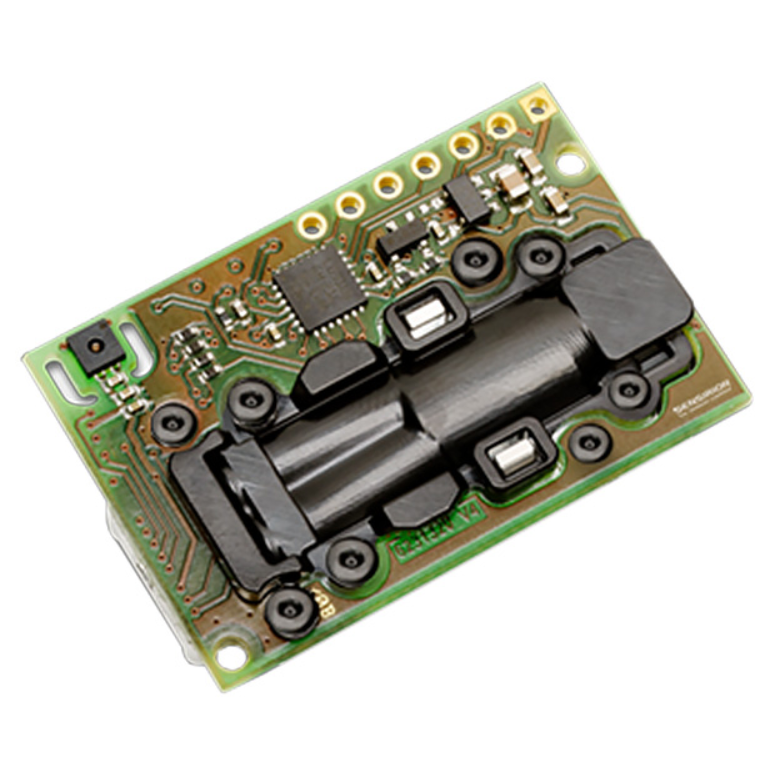
What is SCD30 Sensor?
The Sensirion SCD30 is a high-precision NDIR (Non-Dispersive Infrared) CO₂ sensor module designed to accurately measure carbon dioxide (CO₂) concentration while also monitoring temperature and relative humidity. Unlike low-cost gas sensors that estimate CO₂ indirectly, the SCD-30 performs direct CO₂ measurement using proven NDIR technology, providing excellent accuracy, reliability, and long-term stability.
The module features an integrated temperature and humidity sensor that continuously measures environmental conditions and compensates for external heat sources. This built-in compensation improves CO₂ measurement accuracy without requiring additional sensing components, simplifying system design and reducing development costs.
One of the SCD30's key advantages is its dual-channel optical detection system, which automatically compensates for sensor aging and long-term drift. This ensures stable and reliable measurements throughout the sensor's lifetime. The sensor provides a typical accuracy of ±30 ppm + 3% of the measured value, making it suitable for demanding indoor air quality applications.
With its slim profile and compact dimensions, the SCD30 can be easily integrated into a wide range of products, including HVAC systems, smart home devices, air quality monitors, demand-controlled ventilation systems, and IoT environmental monitoring equipment.
SCD30 Pinout
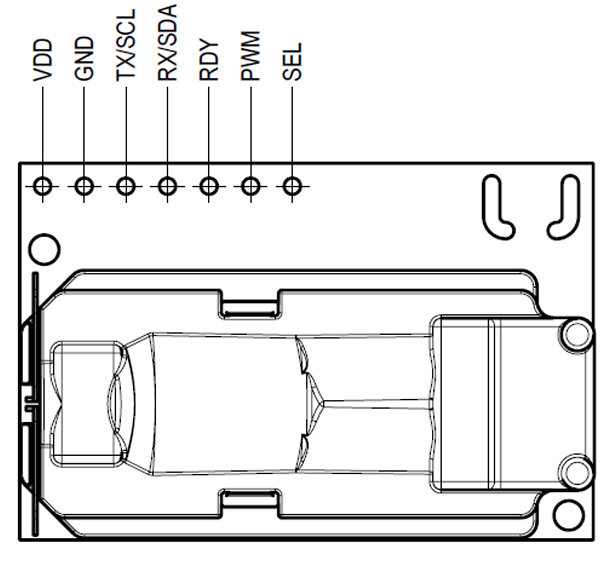
Table
Pin | Description |
VDD | Supply voltage (3.3V–5.5V) |
GND | Ground |
TX / SCL | UART Transmit or I2C Clock |
RX / SDA | UART Receive or I2C Data |
RDY | Data Ready output (HIGH when new data is available) |
PWM | PWM output representing CO₂ concentration |
SEL | Interface selection pin (HIGH = Modbus/UART, LOW or floating = I2C) |
Pin Description
VDD
Power input for the module. Supports 3.3V to 5.5V operation.
GND
Common ground connection.
TX/SCL
Functions as the UART transmission pin when using Modbus communication or the I2C serial clock when operating in I2C mode.
RX/SDA
Functions as the UART receive pin or the I2C serial data line.
RDY
Indicates when a new CO₂ measurement is available.
PWM
Outputs a PWM signal proportional to the measured CO₂ concentration.
SEL
Selects the communication interface:
· HIGH → UART/Modbus
· LOW or Floating → I2C
SCD30 CO2 Sensor Module Specification
Table
Parameter | Value |
Manufacturer | Sensirion AG |
Sensor Type | CO₂, Temperature, Humidity |
CO₂ Technology | NDIR |
Supply Voltage | 3.3V–5.5V |
Current Consumption | 75 mA |
Output Interface | I2C, Modbus (UART), PWM |
Operating Temperature | 0°C to 50°C |
Accuracy | ±30 ppm + 3% of reading |
Measurement Range | 400–10,000 ppm |
Module Size | 35 × 23 × 7 mm |
SCD30 Equivalent and Alternative
SPS30
The SPS30 is Sensirion's laser-based particulate matter sensor designed to measure PM1.0, PM2.5, PM4.0, and PM10 concentrations. It uses laser scattering technology together with contamination-resistant optics to deliver highly accurate measurements throughout a service life of more than ten years. With its compact dimensions of 41 × 41 × 12 mm, the SPS30 is ideal for indoor air quality monitors, smart home products, HVAC systems, and compact environmental monitoring devices.
Best For
· Dust monitoring
· PM2.5 measurement
· Air purifiers
· Environmental monitoring
SCD40
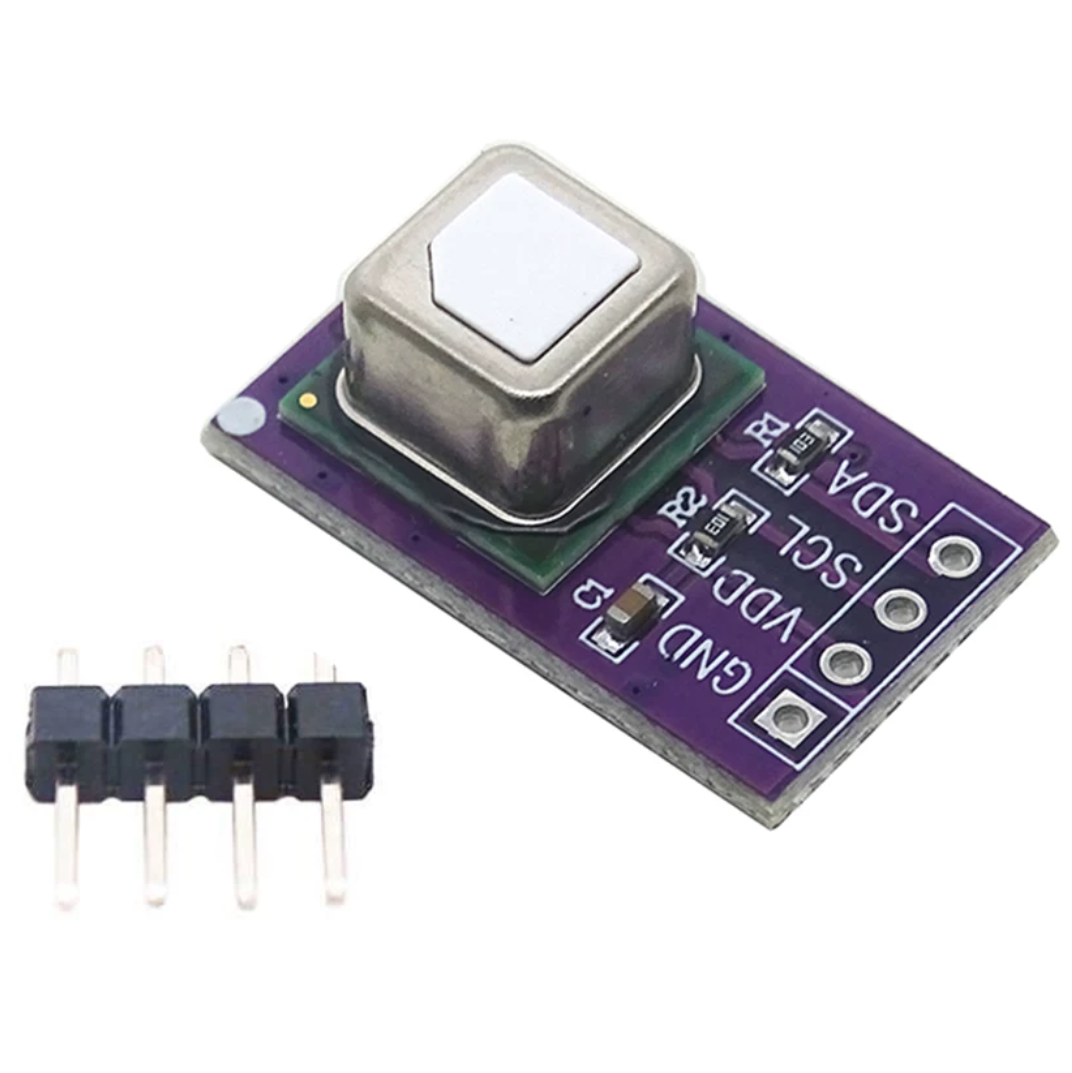
The SCD40 is Sensirion's second-generation CO₂ sensor based on photoacoustic NDIR (PASens®) technology. It integrates temperature and humidity sensing using the SHT4x sensor and provides accurate CO₂ measurements from 400 to 2,000 ppm in a significantly smaller package than the SCD 30. The SCD40 is ideal for compact IoT devices, smart ventilation systems, and energy-efficient building automation.
Best For
· Compact IoT devices
· Smart thermostats
· Battery-powered products
· Indoor air quality monitoring
SCD41
The SCD41 offers improved accuracy and an expanded measurement range of 400 to 5,000 ppm. It supports single-shot operation for low-power applications and complies with standards such as California Title 24 and RESET®. This makes it an excellent choice for portable air quality monitors and smart building solutions requiring greater precision.
Best For
· Portable CO₂ meters
· Battery-powered systems
· Smart buildings
· Energy-saving ventilation
SCD43
The SCD43 is a high-accuracy CO₂ sensor designed for professional indoor air quality applications. It supports measurements from 400 to 5,000 ppm, offers excellent long-term stability, and is compatible with multiple building standards. Its single-shot operation and compact design make it suitable for advanced HVAC systems and commercial environmental monitoring.
Best For
· Commercial HVAC
· Professional IAQ monitors
· Building automation
· Industrial monitoring
Applications
The SCD 30 widely use in modern environmental monitoring and smart building systems.
Demand-Controlled Ventilation (DCV)
Monitors indoor CO₂ levels to adjust ventilation rates automatically, improving air quality while reducing energy consumption.
HVAC Equipment
Provides accurate CO₂ feedback for heating, ventilation, and air conditioning systems to maintain comfortable indoor environments.
Air Conditioning Systems
Optimizes fresh air intake based on measured CO₂ concentration, enhancing comfort and energy efficiency.
Air Purifiers
Works alongside filtration systems to monitor indoor air quality and trigger purification when CO₂ levels rise.
Smart Home Systems
Integrates with home automation platforms for intelligent ventilation control and indoor environmental monitoring.
IoT Devices
Ideal for connected environmental monitoring systems, wireless sensor nodes, and cloud-based air quality solutions.
SCD30 Features
The SCD 30 combines high measurement accuracy with excellent reliability, making it one of the most popular professional CO₂ sensors.
NDIR CO₂ Sensor Technology
Uses advanced Non-Dispersive Infrared technology for direct CO₂ measurement, delivering accurate and reliable readings over many years.
Integrated Temperature and Humidity Sensor
Includes built-in environmental sensors, eliminating the need for additional external components.
Dual-Channel Optical Design
The dual-channel measurement principle compensates for long-term drift, maintaining excellent accuracy throughout the sensor's lifetime.
Wide Measurement Range
Measures CO₂ concentrations from 400 ppm to 10,000 ppm, making it suitable for residential, commercial, and industrial applications.
High Accuracy
Provides measurement accuracy of ±30 ppm + 3% of reading, suitable for indoor air quality monitoring.
Low Power Consumption
Consumes approximately 19 mA during one measurement every two seconds and around 120 mJ per one-second measurement cycle.
Fully Calibrated
Factory calibrated with built-in linearization for easy integration into embedded systems.
Multiple Digital Interfaces
Supports:
· I2C
· UART (Modbus)
· PWM output
CMOSens Technology
Built using Sensirion's CMOSens technology for highly reliable digital sensing.
Excellent Long-Term Stability
Designed for continuous operation with an expected service life exceeding ten years.
Compact Module
Small dimensions of 35 mm × 23 mm × 7 mm make installation easy in space-constrained designs.
Optimized for Mass Production
Designed for cost-effective manufacturing while maintaining industrial-grade performance.
How Does the SCD30 Work?
The SCD 30 measures carbon dioxide using NDIR (Non-Dispersive Infrared) technology. Inside the sensor, an infrared light source emits light through a chamber containing ambient air. Carbon dioxide molecules absorb infrared light at a specific wavelength, and the amount of absorbed light is directly proportional to the CO₂ concentration.
A dual-channel optical system compares the measurement channel with a reference channel, minimizing errors caused by aging, contamination, or changes in the light source. This approach ensures excellent long-term stability and reduces sensor drift.
The module also measures temperature and relative humidity using integrated CMOSens sensors. These values are used internally to compensate the CO₂ measurement, improving accuracy under changing environmental conditions. The processed data is made available through I2C, UART (Modbus), or PWM output, allowing easy integration with microcontrollers and embedded systems.
SCD30 Arduino Code Example
The following example demonstrates how to read CO₂ concentration, temperature, and humidity from the SCD30 sensor using an Arduino board over the I2C interface. Before uploading the sketch, install the SparkFun-SCD30 Arduino-Library from the Arduino Library Manager.
#include <Wire.h>
#include <SparkFun_SCD30_Arduino_Library.h>
SCD30 airSensor;
void setup()
{
Serial.begin(115200);
Wire.begin();
if (airSensor.begin() == false)
{
Serial.println("SCD30 sensor not detected. Please check wiring.");
while (1);
}
Serial.println("SCD30 Initialized");
}
void loop()
{
if (airSensor.dataAvailable())
{
Serial.print("CO2: ");
Serial.print(airSensor.getCO2());
Serial.println(" ppm");
Serial.print("Temperature: ");
Serial.print(airSensor.getTemperature(), 1);
Serial.println(" °C");
Serial.print("Humidity: ");
Serial.print(airSensor.getHumidity(), 1);
Serial.println(" %RH");
Serial.println("----------------------------");
}
delay(2000);
}
Arduino Wiring
SCD30 Pin | Arduino Uno |
VDD | 5V (or 3.3V) |
GND | GND |
SDA (RX/SDA) | A4 (SDA) |
SCL (TX/SCL) | A5 (SCL) |
How the Code Works
The sketch initializes the I2C interface and attempts to detect the SCD30 sensor during startup. Once successfully connect the sensor, the program checks whether new measurement data is available. Every two seconds, it reads the CO₂ concentration in parts per million (ppm), ambient temperature in degrees Celsius, and relative humidity as a percentage. The values are then displayed in the Arduino Serial Monitor, making it easy to monitor indoor air quality in real time.
SCD30 vs SCD40
Table
Feature | SCD30 | SCD40 |
Technology | NDIR | Photoacoustic NDIR (PASens®) |
Size | 35 × 23 × 7 mm | 10.1 × 10.1 × 6.5 mm |
CO₂ Range | 400–10,000 ppm | 400–2,000 ppm |
Temperature Sensor | Yes | Yes |
Humidity Sensor | Yes | Yes |
Communication | I2C, UART, PWM | I2C |
Power Consumption | Higher | Lower |
Best For | Industrial monitoring | Compact IoT devices |
Key Differences
The SCD 30 is designed for applications requiring a wider CO₂ measurement range and multiple communication interfaces, including UART and PWM. Its larger size and higher power consumption make it suitable for fixed installations such as HVAC systems and environmental monitoring stations.
The SCD40, on the other hand, is much smaller and consumes significantly less power thanks to its photoacoustic NDIR technology. It is ideal for compact, battery-powered devices where space and energy efficiency are critical.
SCD30 Datasheet PDF
The data sheet provides complete technical information, including electrical characteristics, communication protocols, timing diagrams, calibration procedures, mechanical dimensions, and recommended operating conditions. You can checkmfor more detailed technical information and implementation guidelines.
Frequently Asked Questions [FAQ]
What is SCD30 price?
The SCD30 sensor module typically costs between US$10 and US$20, depending on the supplier, quantity, and whether it is sold as a bare sensor or a development module. Bulk purchases generally offer lower per-unit pricing.
What does the CO2 sensor do?
A CO₂ sensor measures the concentration of carbon dioxide in the surrounding air. It helps monitor indoor air quality, optimize ventilation systems, improve energy efficiency, and maintain healthy environments in homes, offices, schools, and industrial facilities.
How much do CO2 sensors cost?
CO₂ sensors range from around US$10 for basic modules to over US$100 for industrial-grade sensors. The price depends on measurement technology, accuracy, calibration, communication interface, and environmental performance requirements.
What is the main function of CO2?
Carbon dioxide measurement is primarily used to evaluate indoor air quality. Monitoring CO₂ levels helps control ventilation, reduce energy consumption, improve occupant comfort, and maintain healthy indoor environments in residential and commercial buildings.
Is a CO2 sensor worth it?
Yes. A CO₂ sensor helps maintain healthy indoor air by identifying when need ventilation. It can improve comfort, productivity, sleep quality, and energy efficiency while supporting smart building automation and HVAC optimization.
What is the best CO2 sensor module?
The best CO₂ sensor depends on the application. The SCD 30 is an excellent choice for high-accuracy monitoring with integrated temperature and humidity sensing, while the SCD40 and SCD41 are better suited for compact or low-power IoT devices.
Conclusion
The Sensirion SCD30 is one of the industry's most trusted CO₂ sensor modules for accurate indoor air quality monitoring. Its NDIR sensing technology, integrated temperature and humidity measurement, dual-channel optical compensation, and excellent long-term stability make it suitable for both commercial and industrial applications. Whether you're building a smart HVAC controller, IoT environmental monitor, or air quality station, the SCD 30 offers reliable performance, multiple communication interfaces, and professional-grade accuracy.
Read More:
1. RFM95W LoRa RF Transceiver Module 868 915 MHZ: Guide
2. OPT101 Module: Specifications, Features and Arduino Guide
HOT NEWS
TP4056 Charging Module Pinout, Working, and Applications
TP4056 Charging Module Pinout, Working, and Applications
2026-01-23
LR41 Battery Guide: Specifications, Equivalents, and Uses
LR41 Battery Specifications, Equivalents, and Uses
2025-12-14
Understanding The CD4051 Analog Multiplexer
CD4051 analog multiplexer
2025-06-30
Understanding A 0603 Resistor
0603 resistor,dimensions,marking code, values
2025-05-29
MT3608 Boost Converter - An In-Depth Guide
MT3608 Boost Converter
2025-09-04
The 0402 Resistor: A Comprehensive Guide
0402 Resistor
2025-05-06
Complete Guide to the 220 Ohm Resistor
220 Ohm Resistor
2025-07-28
Mini MP1584 DC-DC 3A Buck Converter Module: Complete Guide
Mini MP1584 DC-DC 3A Buck Converter Module: Complete Guide
2026-03-26
Guide To The XL6009 Boost Converter
XL6009 Boost Converter
2025-09-05
What Is A 1206 Resistor?
1206 resistor dimensions,footprint,value
2025-06-05