




 BOM
BOM Cart
Cart Product Catalog
The Sensirion SPS30 is a high-performance laser particulate matter sensor designed to provide precise and long-term stable air quality measurements. Using advanced laser scattering technology and Sensirion's innovative contamination-resistant design, the SPS 30 delivers accurate readings of PM1.0, PM2.5, PM4.0, and PM10 concentrations while maintaining excellent performance for more than ten years.
In this guide, you'll learn everything you need to know about the SPS 30 sensor, including its features, specifications, working principle, applications, comparison with the PMS5003, Arduino wiring and code example, datasheet information, and answers to frequently asked questions. Whether you're building an indoor air quality monitor, integrating a sensor into an HVAC system, or developing an IoT environmental monitoring project, the SPS 30 is an excellent choice for accurate and reliable particulate matter detection.
7. SPS30 Arduino Code Example Program
8. Frequently Asked Questions [FAQ]
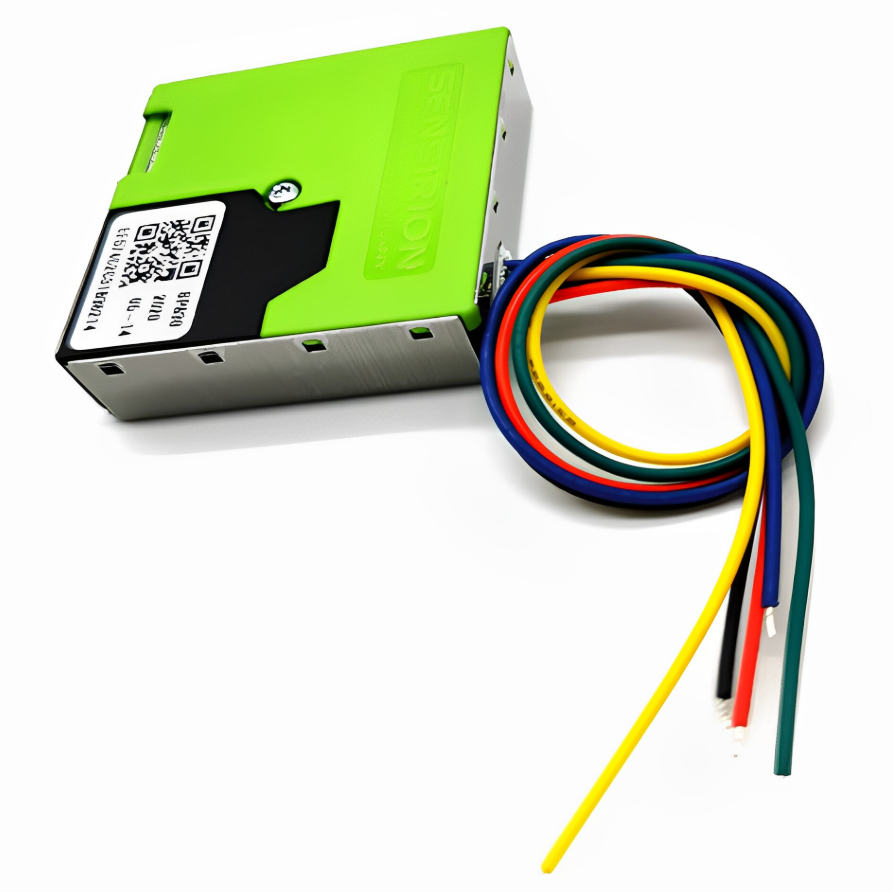
What is the SPS30?
The SPS30 is a high-precision laser particulate matter (PM) sensor developed by Sensirion AG. It measures airborne particles using laser scattering technology, allowing it to detect and classify dust particles of different sizes with exceptional accuracy.
Unlike traditional optical dust sensors, the SPS-30 incorporates Sensirion's proprietary contamination-resistant technology, which significantly reduces the impact of dust accumulation inside the sensor. This innovation enables the sensor to maintain accurate measurements throughout its operational lifetime of more than 10 years, making it ideal for long-term air quality monitoring applications.
The sensor measures both mass concentration (PM1.0, PM2.5, PM4.0, PM10) and particle number concentration, providing comprehensive information about indoor or outdoor air quality. Advanced particle size binning algorithms enable more accurate detection of various types of environmental dust, smoke, pollen, and other airborne particles.
Another major advantage is its compact form factor. Measuring only 41 × 41 × 12 mm, the SPS 30 is suitable for compact devices where installation space is limited, including wall-mounted air quality monitors, portable detectors, smart home products, and HVAC systems.
With factory calibration, digital communication interfaces, and excellent long-term stability, the module has become one of the most popular professional-grade particulate matter sensors available today.
SPS30 Sensor Specifications
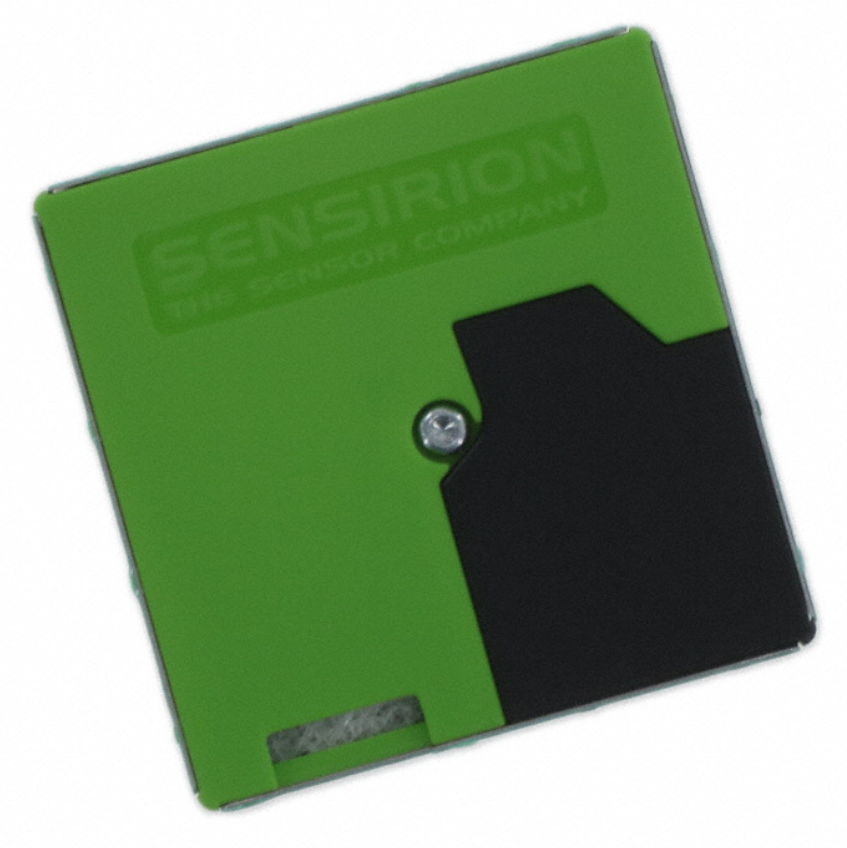
Parameter | Specification |
Manufacturer | Sensirion AG |
Sensor Type | Laser Particulate Matter Sensor |
Measurement Principle | Laser Scattering |
Sensitivity | 10 μg/m³ |
Supply Voltage | 4.5V – 5.5V |
Maximum Current | 60 mA |
Output Interface | I2C, UART |
Digital Output | Yes |
Operating Temperature | -10°C to +60°C |
Package | Box |
Packaging | Tray |
Dimensions | 41 × 41 × 12 mm |
Expected Lifetime | >10 Years |
Sensirion SPS30 Features
Laser Scattering Measurement
The SPS30 uses an advanced laser scattering method to accurately detect airborne particles and calculate particle concentration.
Unique Long-Term Stability
Sensirion's contamination-resistant technology prevents dust buildup inside the optical chamber, maintaining measurement accuracy for over ten years.
Advanced Particle Size Binning
The sensor distinguishes particles of different sizes, making it suitable for detailed air quality analysis.
Superior Measurement Precision
It provides highly accurate measurements of both:
· Mass concentration (PM1.0, PM2.5, PM4.0, PM10)
· Number concentration of particles
Factory-Calibrated Digital Output
Every SPS 30 is factory calibrated and outputs ready-to-use digital data without requiring user calibration.
Compact Ultra-Slim Design
Its slim 41 × 41 × 12 mm package allows installation in portable devices and compact enclosures.
Dual Communication Interfaces
Supports both: I2C and UART, allowing easy integration with Arduino, Raspberry Pi, ESP32, STM32, and other microcontrollers.
Low Maintenance
The contamination-resistant optical design greatly reduces maintenance requirements compared to conventional dust sensors.
SPS30 Applications
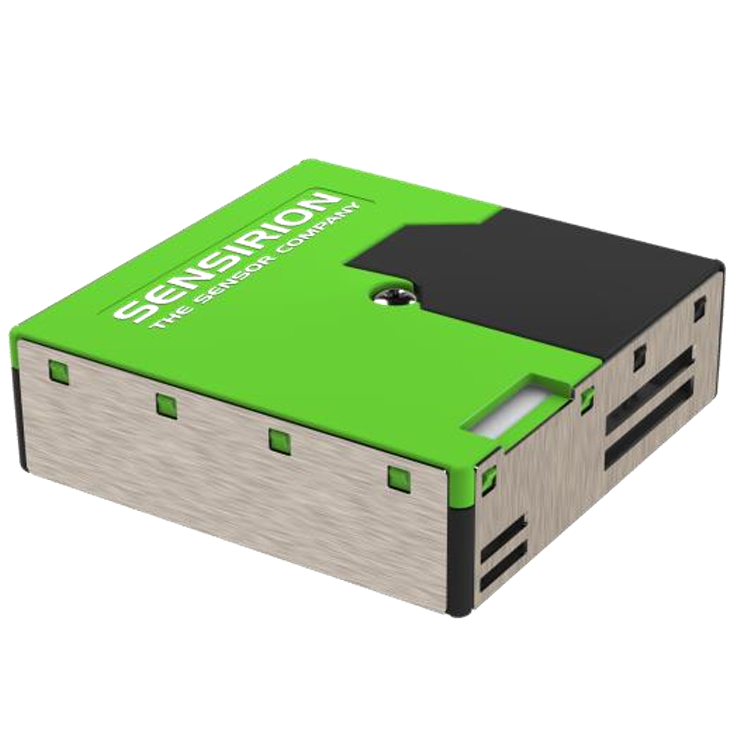
Widely used in professional and consumer air quality monitoring systems.
Indoor Air Quality Monitors
Measures PM2.5 and PM10 concentrations in homes, offices, schools, and hospitals.
Smart Home Devices
Provides real-time air quality information for intelligent ventilation and automation systems.
Air Purifiers
Allows air purifiers to automatically adjust fan speed according to airborne particle concentration.
HVAC Systems
Monitors indoor particulate pollution and optimizes ventilation performance.
Environmental Monitoring Stations
Suitable for continuous monitoring of outdoor air pollution.
Industrial Air Monitoring
Used in factories and workshops to detect airborne dust generated during manufacturing.
Portable Air Quality Instruments
Ideal for handheld pollution detectors and wearable environmental monitoring devices.
Research Laboratories
Supports scientific studies involving aerosols, particulate pollution, and environmental monitoring.
Similar SPS30 Sensors
GP2Y1010AU0F
The GP2Y1010AU0F is an optical dust sensor from Sharp designed to detect airborne dust particles using an infrared LED and phototransistor positioned diagonally across the sensing chamber.
Especially effective for detecting smoke, household dust, pollen, and particles larger than approximately 0.8 μm. The sensor has low power consumption, with a maximum current of 20 mA (typically around 11 mA), and operates from supply voltages up to 7 VDC.
Unlike the SPS 30, the GP2Y1010AU0F provides an analog voltage output proportional to dust concentration, making it simple to interface with microcontrollers using an ADC. Commonly used in air purifiers, ventilation systems, and air conditioners where low-cost dust detection is sufficient.
GP2Y1014AU0F
The GP2Y1014AU0F is another Sharp optical dust sensor optimized for detecting fine particles such as cigarette smoke. It uses an infrared LED and phototransistor arranged diagonally to detect scattered light reflected by airborne dust.
The sensor features extremely low power consumption (typically 11 mA, maximum 20 mA) and supports supply voltages up to 7 VDC. Its analog output voltage is directly proportional to dust concentration, with a sensitivity of approximately 0.5 V per 0.1 mg/m³.
Widely used in air purification equipment and compact environmental monitoring devices where analog dust sensing is adequate.
PMS9103M
The PMS9103M from Plantower is a laser-based particulate matter sensor that uses the laser scattering principle to detect suspended particles in the air. A laser illuminates airborne particles, and scattered light is collected at a specific angle. The internal microprocessor applies Mie scattering theory to calculate the equivalent particle diameter and the number of particles in different size ranges.
The PMS9103M provides digital output with high measurement accuracy and is suitable for portable air quality monitors, smart appliances, and environmental monitoring systems.
PMS5003
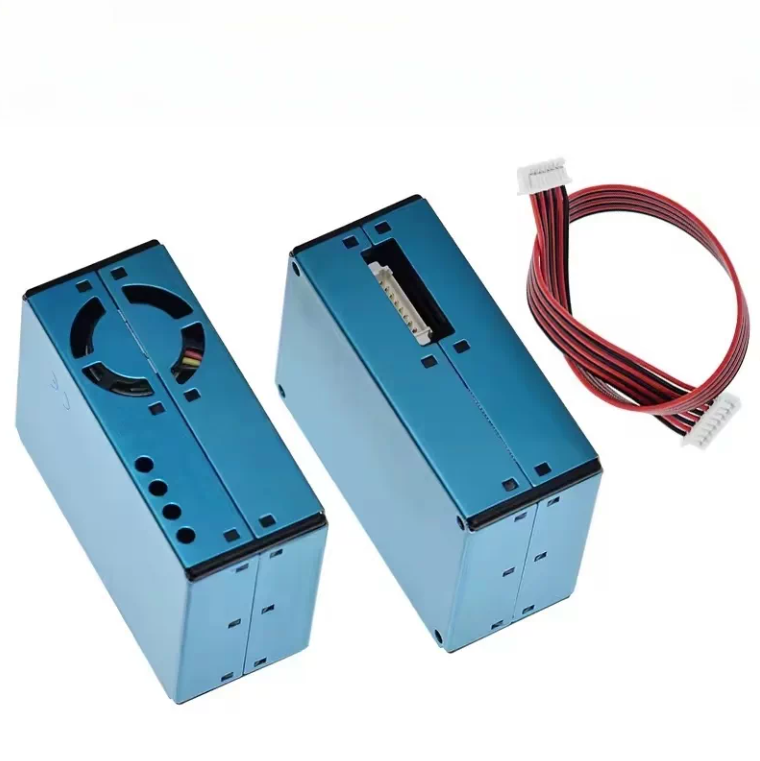
The PMS5003 is one of the most widely used laser particulate matter sensors. It provides digital measurements of suspended particle concentration and particle count within a unit volume of air.
Key features include:
· Real-time measurement
· High accuracy
· Low false alarm rate
· Minimum detectable particle size of 0.3 μm
· Fast response time (<10 seconds)
Measurement ranges include:
· 0.3–1.0 μm
· 1.0–2.5 μm
· 2.5–10 μm
The PMS5003 is commonly found in air purifiers, DIY air quality monitors, weather stations, and smart home devices.
SPS30 vs PMS5003
Table
Feature | SPS30 | PMS5003 |
Manufacturer | Sensirion | Plantower |
Detection Method | Laser Scattering | Laser Scattering |
Output | I2C, UART | UART |
PM Measurement | PM1.0, PM2.5, PM4.0, PM10 | PM1.0, PM2.5, PM10 |
Particle Number Output | Yes | Limited |
Factory Calibration | Yes | Yes |
Long-Term Stability | Excellent (>10 years) | Good |
Contamination Resistance | Advanced | Standard |
Power Supply | 4.5–5.5V | 5V |
Fan Lifetime | Long | Standard |
Typical Applications | Professional Air Monitoring | Consumer Air Quality Monitoring |
Key Differences
The SPS30 offers significantly better long-term stability thanks to Sensirion's contamination-resistant technology. It also measures PM4.0 and provides more detailed particle number concentration data. The PMS5003 is a more affordable alternative and is widely used in DIY projects and consumer air quality monitors. For applications requiring higher accuracy and longer service life, the SPS 30 is generally the preferred choice.
SPS30 Arduino Code Example Program
#include <Wire.h>
#include <sps30.h>
SPS30 sps30;
void setup() {
Serial.begin(115200);
Wire.begin();
if (sps30.begin(Wire) != 0) {
Serial.println("SPS30 not detected.");
while (1);
}
sps30.startMeasurement();
}
void loop() {
struct sps30_measurement m;
if (sps30.readMeasurement(&m) == 0) {
Serial.print("PM1.0: ");
Serial.print(m.mc_1p0);
Serial.print(" ug/m3 ");
Serial.print("PM2.5: ");
Serial.print(m.mc_2p5);
Serial.print(" ug/m3 ");
Serial.print("PM4.0: ");
Serial.print(m.mc_4p0);
Serial.print(" ug/m3 ");
Serial.print("PM10: ");
Serial.println(m.mc_10p0);
}
delay(1000);
}
SPS30 Arduino Wiring
SPS30 Pin | Arduino Uno |
VIN | 5V |
GND | GND |
SDA | A4 |
SCL | A5 |
For UART communication:
SPS30 Pin | Arduino |
TX | RX |
RX | TX |
GND | GND |
VIN | 5V |
Sensirion SPS30 PDF Datasheet
The official data sheet provides comprehensive technical information, including electrical characteristics, communication protocols, timing diagrams, operating conditions and integration guidelines. You can check the datasheet for more detailed technical information before designing your project.
Frequently Asked Questions [FAQ]
What is SPS30 price?
The SPS30 typically costs between US$10 and US$60, depending on the supplier, order quantity, and included accessories. Bulk purchases usually receive lower pricing, while development kits and evaluation boards may cost more than the standalone sensor.
What is a PM2 5 sensor?
A PM2.5 sensor measures fine airborne particles with diameters of 2.5 micrometers or smaller. These particles can penetrate deep into the lungs and affect human health. PM2.5 sensors are commonly used in air quality monitors, air purifiers, HVAC systems, and environmental monitoring stations.
What is PM2.5 detection?
PM2.5 detection is the process of measuring the concentration of fine particulate matter suspended in the air. Modern sensors, such as the SPS 30, use laser scattering technology to detect these particles and calculate their mass concentration, helping monitor indoor and outdoor air quality.
Do I need a PM 2.5 sensor?
A PM2.5 sensor is beneficial if monitor air quality, improve indoor ventilation, or control an air purifier automatically. It is especially useful in areas affected by pollution, wildfire smoke, industrial emissions, or allergens, helping create a healthier indoor environment.
What sensors can be used?
Common particulate matter sensors include the Sensirion SPS30, Plantower PMS5003, PMS9103M, Sharp GP2Y1010AU0F, and GP2Y1014AU0F. The best choice depends on your required accuracy, communication interface, operating environment, and budget.
Recommendation for Outdoor Air Quality monitor?
For outdoor monitoring, choose a laser-based sensor with strong long-term stability and environmental protection. The SPS30 is an excellent option because of its contamination-resistant design and reliable performance. Pair it with a weatherproof enclosure, proper airflow, and periodic maintenance for the most accurate long-term outdoor measurements.
Conclusion
The Sensirion SPS30 is one of the most advanced particulate matter sensors available for air quality monitoring. Its laser scattering technology, contamination-resistant optical design, and sophisticated particle analysis algorithms provide reliable and accurate PM measurements over an exceptionally long service life. Whether used in smart home devices, air purifiers, HVAC systems, environmental monitoring stations, or industrial applications, the SPS 30 delivers professional performance with minimal maintenance. For projects that demand precise, stable, and long-lasting particulate monitoring, the SPS-30 is an outstanding choice.
Read More:
1. SCD30 CO2 Sensor Module: Pinout, Arduino Guide & Datasheet
2. Mini MP1584 DC-DC 3A Buck Converter Module: Complete Guide
3. AO3401 Transistor : Pinout, Specifications and Equivalents
HOT NEWS
TP4056 Charging Module Pinout, Working, and Applications
TP4056 Charging Module Pinout, Working, and Applications
2026-01-23
LR41 Battery Guide: Specifications, Equivalents, and Uses
LR41 Battery Specifications, Equivalents, and Uses
2025-12-14
Understanding A 0603 Resistor
0603 resistor,dimensions,marking code, values
2025-05-29
MT3608 Boost Converter - An In-Depth Guide
MT3608 Boost Converter
2025-09-04
The 0402 Resistor: A Comprehensive Guide
0402 Resistor
2025-05-06
Complete Guide to the 220 Ohm Resistor
220 Ohm Resistor
2025-07-28
What Is A 1206 Resistor?
1206 resistor dimensions,footprint,value
2025-06-05
Guide To The XL6009 Boost Converter
XL6009 Boost Converter
2025-09-05
Understanding The CD4051 Analog Multiplexer
CD4051 analog multiplexer
2025-06-30
120 Ohm Resistor- Specifications, Applications, and Features
2025-05-12