



 BOM
 Cart
 Product Catalog
The STM32F407VGT6 is a high-performance 32-bit microcontroller from STMicroelectronics, based on the Arm Cortex-M4 processor with a floating-point unit (FPU). Operating at up to 168 MHz, it combines high-speed processing, extensive memory resources, advanced timers, analog peripherals, and multiple communication interfaces in a single chip.
With 1 MB of Flash memory, 192 KB of SRAM, and support for interfaces such as USB OTG, CAN, SPI, I2C, UART, and Ethernet, the STM32F407 is suitable for embedded control, industrial automation, motor control, audio processing, and other applications requiring reliable real-time performance.
In this article, we will introduce the STM32F407 VGT6 microcontroller, covering its specifications, pinout, applications, alternatives, maximum operating limits, and compatible development boards.
1. What is STM32F407VGT6 Microcontroller?
6. Alternatives and Equivalents
7. Maximum Limits for STM32F407VGT6 Usage
8. STM32F407VGT6 Development Board
9. Frequently Asked Questions [FAQ]
What is STM32F407VGT6 Microcontroller?
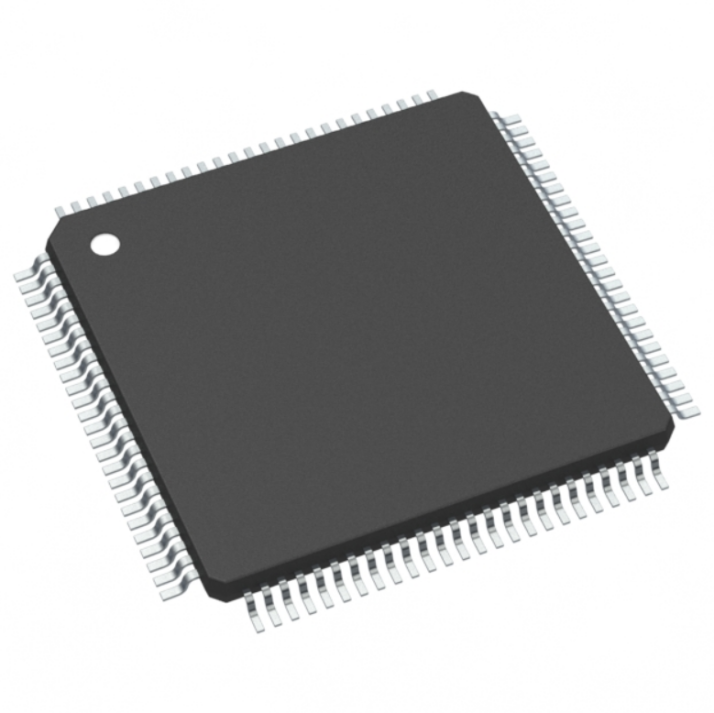
The STM32F407VGT6 is a 32-bit microcontroller belonging to STMicroelectronics' STM32F4 series. It is based on the high-performance Arm Cortex-M4 RISC core, which operates at a maximum frequency of 168 MHz. The processor includes a single-precision floating-point unit (FPU), a complete set of DSP instructions, and a memory protection unit (MPU), making it suitable for computationally demanding embedded applications.
The STM32F407 VGT6 integrates 1 MB of Flash memory, up to 192 KB of SRAM, and 4 KB of backup SRAM. Its internal architecture connects a wide range of peripherals through two APB buses, three AHB buses, and a 32-bit multi-AHB bus matrix. This architecture supports efficient communication between the processor, memory, and peripheral modules.
For analog signal processing, the STM 32F407VGT6 provides three 12-bit ADCs and two 12-bit DACs. It also includes multiple timers, PWM channels, a real-time clock (RTC), DMA controllers, and a true random number generator (RNG). These resources allow developers to implement motor control, sensor acquisition, waveform generation, and real-time control systems.
The microcontroller supports a broad selection of communication interfaces, including:
· Up to three I2C interfaces.
· Three SPI interfaces and two full-duplex I2S interfaces.
· Four USART interfaces and two UART interfaces.
· USB OTG Full Speed and USB OTG High Speed with an external PHY.
· Two CAN interfaces.
· One SDIO/MMC interface.
· Ethernet MAC and a digital camera interface.
The Ethernet and camera interfaces are available specifically on STM32F407 devices.
The STM 32F407VGT6 operates from a supply voltage of 1.8V~3.6V and supports an industrial-grade temperature range according to the device specifications. It is supplied in a 100-pin LQFP package, making it suitable for embedded systems that require a balance between processing performance, peripheral connectivity, and PCB integration.
STM32F407VGT6 Specifications
The STM 32F407VGT6 combines a 168 MHz processor with substantial memory capacity and a wide range of integrated peripherals.
Parameter | Value |
Manufacturer | STMicroelectronics |
Series | STM32F4 |
Core Processor | ARM Cortex-M4 |
Core Size | 32-Bit |
Maximum Clock Speed | 168 MHz |
Flash Memory | 1 MB |
SRAM | 192 KB |
Backup SRAM | 4 KB |
Supply Voltage | 1.8V~3.6V |
Number of I/O Pins | 82 |
ADC | 3 × 12-bit |
DAC | 2 × 12-bit |
Communication Interfaces | CAN, I2C, SPI, UART, USART, USB OTG, Ethernet |
Peripherals | DMA, I2S, PWM, RTC, WDT |
Oscillator Type | Internal |
Operating Temperature | -40°C~85°C (listed TA specification) |
Mounting Type | Surface Mount |
Package | 100-LQFP |
Package Dimensions | 14 × 14 mm |
STM32F407VGT6 Key Features
High-Performance Cortex-M4 Core: The chip features a 32-bit Arm Cortex-M4 processor operating at up to 168 MHz. It integrates a single-precision floating-point unit (FPU), DSP instructions, and a memory protection unit (MPU), enabling efficient mathematical calculations, digital signal processing, and real-time control operations. Its processing performance makes it suitable for applications that require fast data handling and complex embedded algorithms.
Large Memory Capacity: The device provides 1 MB of embedded Flash memory for storing application programs and firmware, along with 192 KB of SRAM for temporary data and runtime operations. It also includes 4 KB of backup SRAM, which can retain important data when the main power supply is unavailable, provided the backup power domain remains powered.
Advanced Analog Peripherals: The component integrates three 12-bit ADCs and two 12-bit DACs. These analog peripherals support sensor data acquisition, voltage measurement, signal conversion, and analog output generation. The ADCs can be used for monitoring temperature, pressure, current, and other analog signals, while the DACs support waveform generation and analog control applications.
Extensive Communication Interfaces: The microcontroller offers a wide range of communication interfaces, including up to three I2C interfaces, three SPI interfaces, four USART interfaces, two UART interfaces, two CAN controllers, and USB OTG connectivity. It also supports SDIO/MMC for external memory cards. These interfaces allow the device to communicate with sensors, displays, storage devices, wireless modules, and other embedded controllers.
Advanced Timer Functionality: The STM 32F407VGT6 incorporates multiple 16-bit and 32-bit timers, including advanced-control timers designed for motor control applications. These timers support PWM generation, input capture, output compare, pulse measurement, and time-based control. They are useful for controlling motor speed, generating precise signals, and synchronizing multiple hardware operations.
Ethernet and Camera Support: Unlike some other STM32F4 family devices, the STM 32F407VGT6 includes an integrated 10/100 Ethernet MAC and a digital camera interface (DCMI). The Ethernet controller supports network communication through an external physical-layer transceiver, while the camera interface enables connection to compatible parallel camera modules for image acquisition and processing.
Flexible Power Management: The device operates from a 1.8V~3.6V power supply and provides multiple low-power operating modes. These modes allow developers to reduce power consumption when the processor and peripherals are not actively required, making the microcontroller suitable for battery-powered and energy-conscious embedded systems.
Wide Peripheral and GPIO Support: The STM32F407VGT6 provides up to 82 general-purpose I/O pins in its 100-pin LQFP package. GPIO pins support configurable input, output, alternate-function, and analog modes, allowing flexible connections to external circuits and integrated peripherals.
STM32F407VGT6 Applications
The STM 32F407VGT6 is designed for embedded applications that require high processing performance, multiple communication interfaces, and real-time peripheral control. Its 168 MHz Cortex-M4 core, DSP instructions, integrated FPU, and extensive peripheral resources make it suitable for industrial, consumer, and communication systems.
Common applications include:
Motor Drive and Application Control: Advanced timers and PWM channels support motor speed regulation, position control, and power management. Can use the circuit in brushless DC motor controllers, servo drives, and other real-time motion control systems.
Medical Equipment: Its processing capability and integrated analog interfaces make it suitable for medical measurement instruments, patient monitoring equipment, diagnostic devices, and portable medical systems that require accurate data acquisition and processing.
Industrial Automation: Can use the microcontroller in programmable logic controllers (PLCs), inverters, circuit breakers, industrial monitoring systems, and automated production equipment. Its CAN, SPI, UART, and Ethernet connectivity supports communication between industrial devices.
Printers and Scanners: Its high-speed processing, memory resources, and peripheral connectivity support image data processing, print control, scanning operations, motor positioning, and communication with external devices.
Alarm Systems and Video Intercoms: USB, Ethernet, and camera interfaces support connected security systems, video intercom equipment, access control devices, and intelligent surveillance terminals.
HVAC Systems: The STM 32F407VGT6 can manage temperature monitoring, ventilation control, air conditioning systems, and automated building functions. Its ADC channels and communication interfaces allow it to collect sensor data and coordinate different control modules.
Home Audio Appliances: Integrated I2S interfaces, DSP instructions, and audio clock support make it suitable for digital audio processing, sound equipment, home entertainment systems, and audio control devices.
Communication and Networking Equipment: Its Ethernet MAC, USB OTG, and multiple serial interfaces support network-connected embedded devices, communication gateways, and data acquisition terminals.
Consumer Electronics: The combination of processing performance, memory, and flexible GPIO resources makes it suitable for smart appliances, electronic control panels, multimedia devices, and other intelligent consumer products.
STM32F407VGT6 Pinout
The STM 32F407VGT6 comes in a 100-pin LQFP package with dimensions of 14 × 14 mm. Its pins are divided into GPIO ports, power supply connections, ground pins, clock inputs, reset connections, and dedicated analog and communication interfaces.
The GPIO pins support multiple alternate functions, allowing the same physical pin to be configured for different peripherals depending on the application.
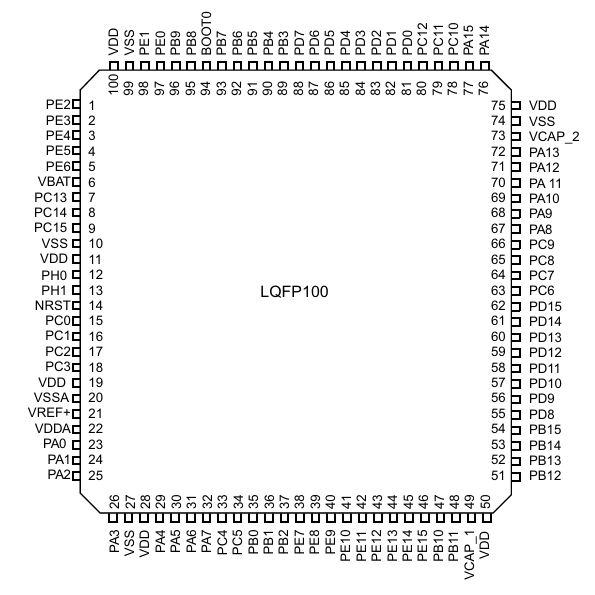
Main STM32F407VGT6 Pin Groups
Pin Group | Function |
VDD | Main digital power supply |
VSS | Ground |
VDDA | Analog power supply |
VSSA | Analog ground |
VBAT | Backup power supply |
NRST | External reset |
PH0/PH1 | High-speed external oscillator |
PC14/PC15 | Low-speed external oscillator |
PA13/PA14 | SWD debugging interface |
PA11/PA12 | USB OTG Full Speed |
PB8/PB9 | Common I2C alternate-function pins |
PA5/PA6/PA7 | Common SPI1 alternate-function pins |
PA9/PA10 | Common USART1 alternate-function pins |
Important Pinout Considerations
The STM32F407 VGT6 supports multiple alternate functions, so should check pin assignments before designing the PCB. Some peripheral functions share GPIO pins and cannot necessarily operate simultaneously.
The device also requires proper power supply decoupling, external clock configuration when needed, and suitable reset circuitry. For USB High Speed and Ethernet applications, additional external hardware may be required.
STM32F407VGT6 Alternatives and Equivalents
Can consider several microcontrollers as alternatives to the STM32F407 VGT6. However, differences in processor architecture, clock frequency, memory, package, and peripheral availability should be evaluated before selecting a replacement.
GD32F407VGT6
The GD32F407VGT6 is a 32-bit microcontroller from GigaDevice designed for high-performance embedded applications. It belongs to the GD32F4 family and offers a similar Cortex-M4-based architecture. It can be considered when evaluating an alternative to the STM32F407VGT6, but software compatibility, peripheral differences, and electrical specifications should be verified before replacement.
STM32F101VGT6
The STM32F101VGT6 belongs to the STM32F1 series and uses an Arm Cortex-M3 processor. It offers a lower processing frequency than the STM32F407VGT6. Although it may be suitable for less demanding embedded applications, its architecture and peripheral resources differ, so it is not a direct replacement.
STM32F407VGT6TR
The STM32F407VGT6TR is the tape-and-reel ordering version of the STM32F407VGT6. It uses the same microcontroller architecture, memory capacity, operating frequency, and package. It is not a different-performance alternative.
STM32F427VIT6
The STM32F427VIT6 is another high-performance STM32F4-series microcontroller based on the Arm Cortex-M4 core. It offers a higher maximum operating frequency of 180 MHz and 2 MB of Flash memory. However, it uses a different package configuration, so must check PCB compatibility.
Model | Maximum Frequency | Flash | Main Difference |
STM32F407VGT6 | 168 MHz | 1 MB | Original device |
GD32F407VGT6 | Check datasheet | Check datasheet | Different manufacturer |
STM32F101VGT6 | 36 MHz | 1 MB | Lower performance |
STM32F407VGT6TR | 168 MHz | 1 MB | Tape-and-reel version |
STM32F427VIT6 | 180 MHz | 2 MB | Higher memory and performance |
Maximum Limits for STM32F407VGT6 Usage
When designing circuits with the STM32F407VGT6, it is important to distinguish between recommended operating conditions and absolute maximum ratings.
Recommended operating conditions define the range in which the microcontroller is designed to function correctly. Absolute maximum ratings represent stress limits that must not be exceeded, even temporarily.
The following are important absolute maximum ratings from the STM32F407xx datasheet:
Parameter | Maximum/Minimum Limit |
Main supply voltage (VDD-VSS) | -0.3V~4.0V |
Input voltage on 5V-tolerant pins | VSS-0.3V to VDD+4V |
Input voltage on other pins | -0.3V~4.0V |
Maximum current into VDD power lines | 240 mA |
Maximum current out of VSS ground lines | 240 mA |
Output current per I/O pin | ±25 mA |
Maximum total injected current | ±25 mA |
Storage temperature | -65°C~+150°C |
Maximum junction temperature | 125°C |
These are absolute stress ratings, not normal operating targets. In particular, the maximum I/O current should not be treated as a recommended continuous output current.
Important Design Notes
· Maintain the recommended 1.8V~3.6V operating supply voltage.
· Use appropriate decoupling capacitors close to the power pins.
· Do not exceed the voltage limits of individual GPIO pins.
· Check the 5V-tolerant designation of each pin before connecting 5V signals.
· Keep the junction temperature within the specified operating limits.
· Follow the recommended VCAP capacitor and power supply connections.
For the STM32F407VGT6 suffix 6 device, the specified ambient operating temperature range is -40°C~+85°C. The +105°C upper temperature range applies to the corresponding suffix 7 version.
STM32F407VGT6 Development Board
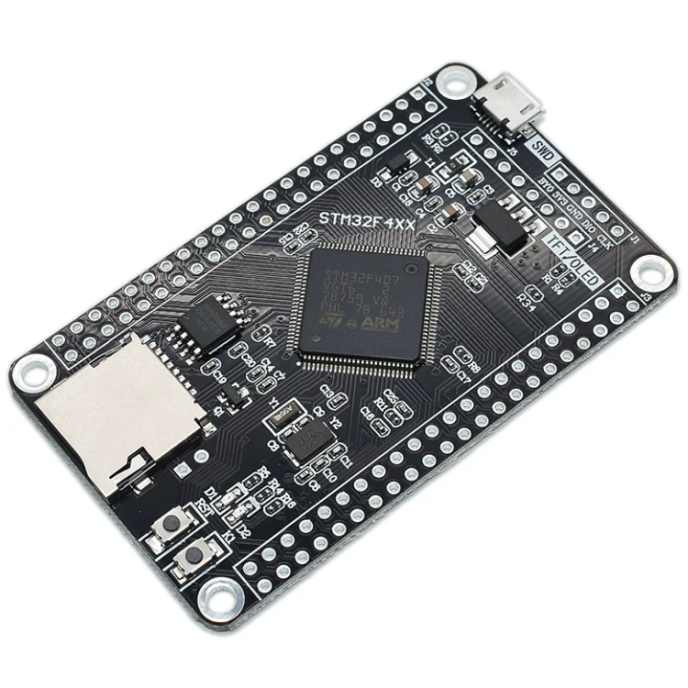
An STM32F407VGT6 development board provides a convenient platform for testing the microcontroller and developing embedded applications. It generally includes the STM32F407 series MCU, a clock circuit, reset circuitry, power management, and programming/debugging interfaces.
The main hardware resources commonly provided by STM32F407 development boards include:
Parameter | Description |
Core | Cortex-M4 32-bit RISC |
DSP | Single-cycle DSP instructions |
Operating Frequency | 168 MHz |
Processing Performance | 210 DMIPS |
Operating Voltage | 1.8V~3.6V |
Package | LQFP100 |
Flash Memory | 1 MB |
SRAM | 192 KB + 4 KB backup SRAM |
SPI | 3 |
USART | 3 in the listed board configuration |
UART | 2 |
I2S | 2 |
I2C | 3 |
FSMC | 1 |
SDIO | 1 |
CAN | 2 |
USB | Full Speed/High Speed controller |
Ethernet | 10/100 Mbps MAC |
Camera Interface | 8- to 14-bit parallel interface |
ADC | 3 × 12-bit |
DAC | 2 × 12-bit |
The development board can be used for motor control, communication experiments, sensor data acquisition, digital audio processing, and embedded networking.
STM32F407VGT6 Development Environment
Can program the STM32F407 VGT6 using several development tools:
STM32CubeIDE: An integrated development environment for writing, compiling, debugging, and programming STM32 applications.
STM32CubeMX: A graphical configuration tool for setting up clocks, GPIOs, peripherals, and middleware.
Keil MDK: A professional embedded development environment supporting ARM Cortex-M processors.
IAR Embedded Workbench: An embedded development toolchain for compiling and debugging STM32 firmware.
ST-LINK: A programming and debugging tool supporting SWD and JTAG interfaces.
These tools provide a development workflow for configuring the microcontroller, writing firmware, debugging peripherals, and testing application functionality.
Frequently Asked Questions [FAQ]
What is STM32F407?
The STM32F407 is a high-performance 32-bit microcontroller series from STMicroelectronics based on the Arm Cortex-M4 core with an FPU and DSP instructions. It operates at up to 168 MHz and provides integrated Flash memory, SRAM, ADCs, DACs, timers, USB, CAN, and other communication peripherals for embedded applications.
What are typical applications of the STM32F407VGT6?
The STM32F407VGT6 is commonly used in industrial automation, motor control, medical instruments, printers, scanners, alarm systems, video intercoms, HVAC controllers, and home audio equipment. Its processing performance, memory capacity, and extensive peripheral interfaces make it suitable for complex embedded control and signal-processing applications.
How much Flash memory does the STM32F407VGT6 have?
The STM32F407VGT6 contains 1 MB of embedded Flash memory for storing program code, firmware, and other nonvolatile data. It also provides 192 KB of SRAM for runtime operations and 4 KB of backup SRAM for retaining data in supported backup power conditions.
What is the maximum operating frequency of the STM32F407VGT6?
The STM32F407VGT6 operates at a maximum CPU frequency of 168 MHz. Its Arm Cortex-M4 processor includes a single-precision floating-point unit and DSP instructions, delivering up to 210 DMIPS of processing performance.
What is the operating voltage of the STM32F407VGT6?
The STM32F407 VGT6 has a recommended main supply voltage range of 1.8V~3.6V. Its power supply and GPIO connections must follow the electrical specifications in the datasheet to ensure reliable operation.
What is the STM32F407VGT6 price?
The STM32F407VGT6 price depends on the supplier, order quantity, packaging, and market availability. Bulk purchases may have different unit prices from individual purchases. Contact electronic component distributors for current quotations and stock information.
Conclusion
The STM32F407VGT6 is a powerful 32-bit microcontroller that combines an Arm Cortex-M4 core, 168 MHz operating frequency, 1 MB Flash memory, and 192 KB SRAM. Its integrated ADCs, DACs, timers, USB OTG, CAN, SPI, I2C, UART, Ethernet, and camera interfaces provide extensive flexibility for embedded system development.
With its 100-pin LQFP package and broad peripheral support, the STM32F407VGT6 is a suitable choice for industrial control, motor drive systems, digital audio equipment, communication devices, and other demanding embedded applications. Developers can also use compatible STM32F407 development boards and software tools to simplify prototyping, programming, and debugging.
Read More:
1. PIC12F675 Microcontroller: Pinout and Development Board
2. ATMEGA32U4 Microcontroller: And Arduino Pro Micro Board
3. MCP2515 CAN Bus Controller: Pinout, Guide and Module Board
STM32F407VGT6 Datasheet:
HOT NEWS
TP4056 Charging Module Pinout, Working, and Applications
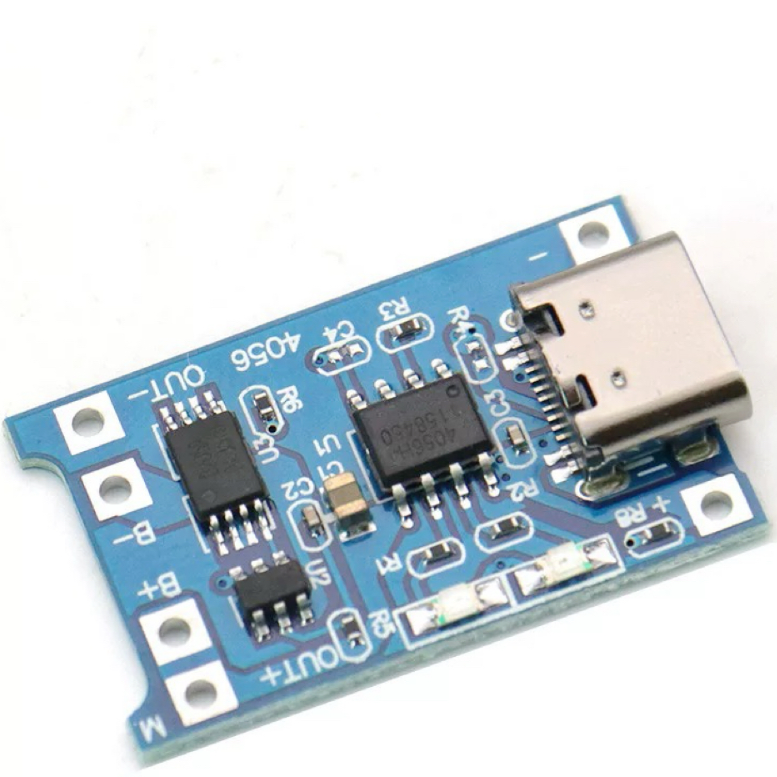
TP4056 Charging Module Pinout, Working, and Applications
2026-01-23
Understanding The CD4051 Analog Multiplexer
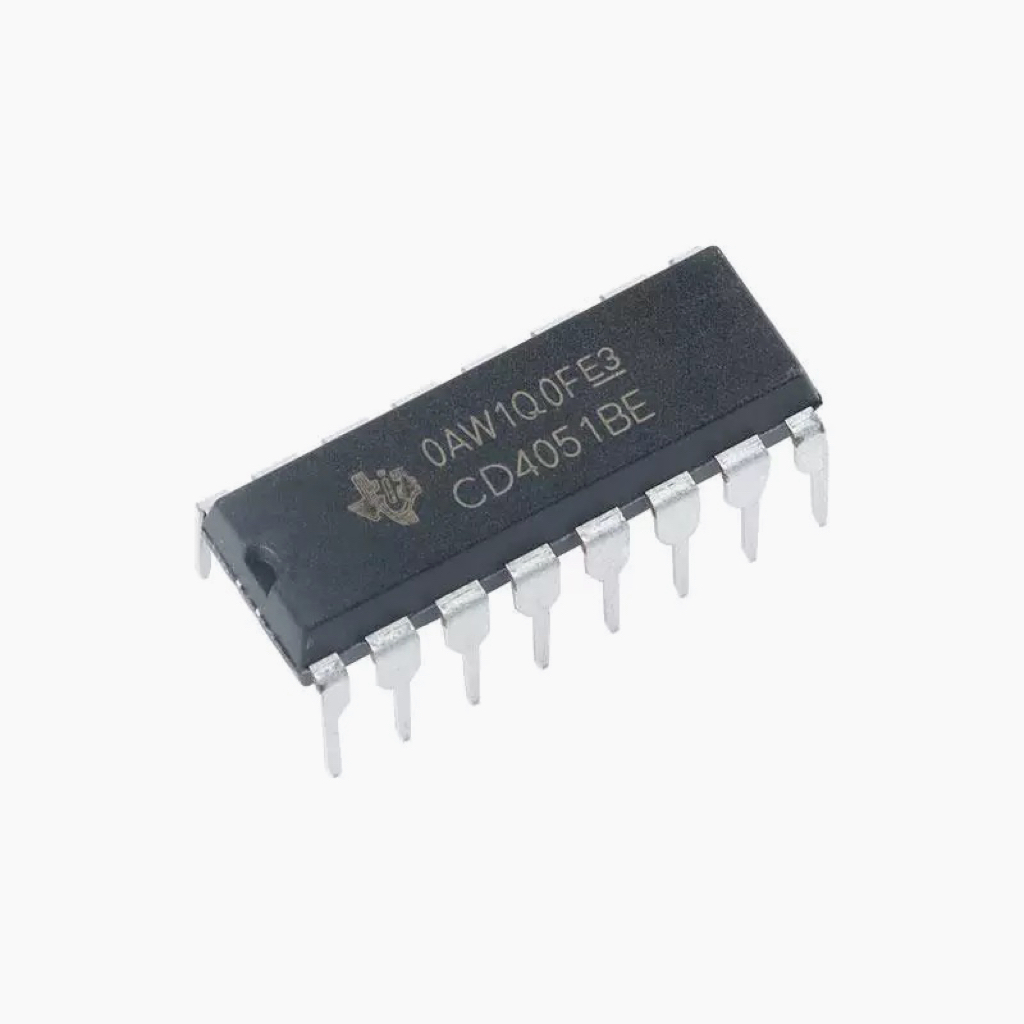
CD4051 analog multiplexer
2025-06-30
LR41 Battery Guide: Specifications, Equivalents, and Uses
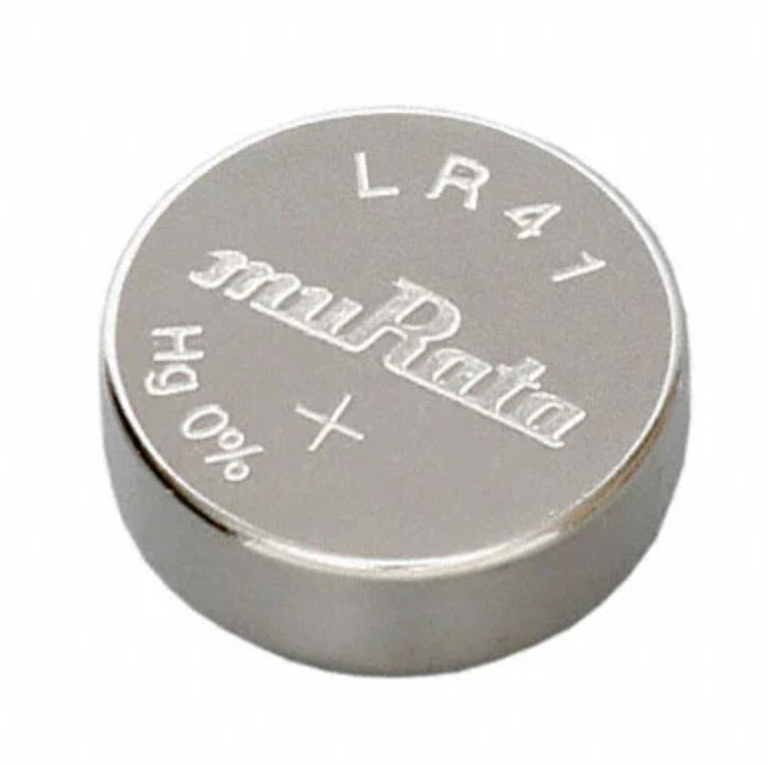
LR41 Battery Specifications, Equivalents, and Uses
2025-12-14
Understanding A 0603 Resistor
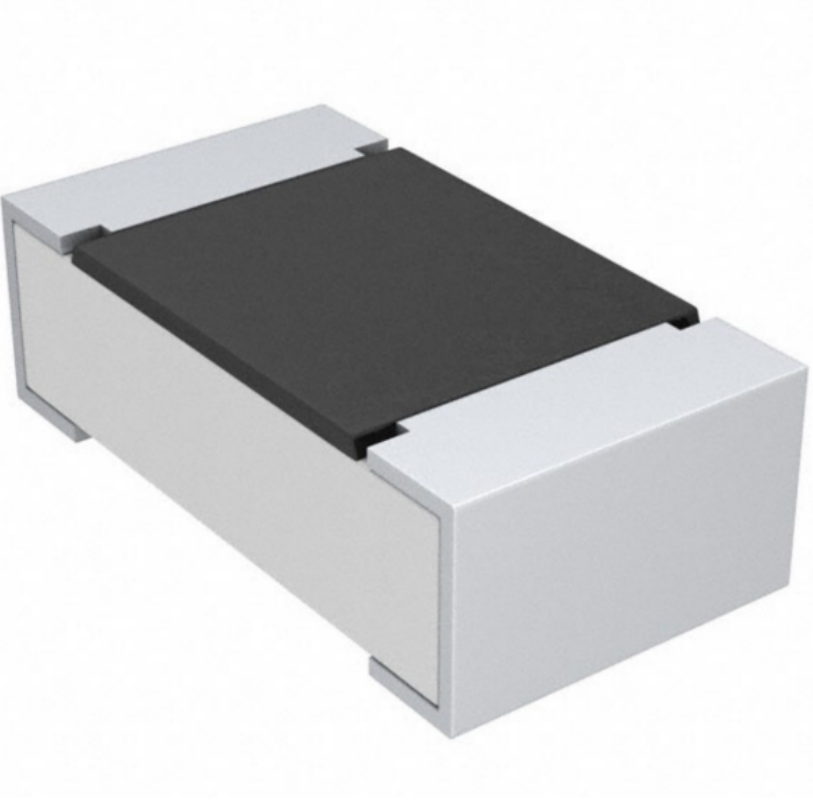
0603 resistor,dimensions,marking code, values
2025-05-29
Mini MP1584 DC-DC 3A Buck Converter Module: Complete Guide
Mini MP1584 DC-DC 3A Buck Converter Module: Complete Guide
2026-03-26
MT3608 Boost Converter - An In-Depth Guide
MT3608 Boost Converter
2025-09-04
The 0402 Resistor: A Comprehensive Guide
0402 Resistor
2025-05-06
Guide To The XL6009 Boost Converter
XL6009 Boost Converter
2025-09-05
TTP223 Touch Switch - Pinout, Datasheet & Applications

TTP223 Touch Switch - Pinout, Datasheet & Applications
2026-02-11
Complete Guide to the 220 Ohm Resistor
220 Ohm Resistor
2025-07-28