




 BOM
BOM Cart
Cart Product Catalog
TEC1-12706 is one of the most popular thermoelectric cooling modules used in electronic and industrial applications. Based on the Peltier effect, this compact solid-state device can efficiently transfer heat from one side of the module to the other when powered by a DC voltage, making it ideal for cooling, heating, and precise temperature control. With its 12V operating voltage, 127 semiconductor couples, and cooling capacity of up to 60–72W, the module widely use in portable refrigerators, CPU cooling projects, water dispensers, laboratory equipment, and DIY electronics.
In this guide, we'll explore everything you need to know about the TEC1-12706 Peltier Module, including its working principle, technical specifications, key features, applications, wiring, usage tips, and a comparison with the TEC1-12705. Whether you're an engineer, student, or electronics enthusiast, this article will help you understand how the module can provide reliable and efficient thermal management for a wide range of projects.
1. What is TEC1-12706 Peltier Module?
7. Advantages and Limitations of the TEC1-12706
8. Frequently Asked Questions [FAQ]
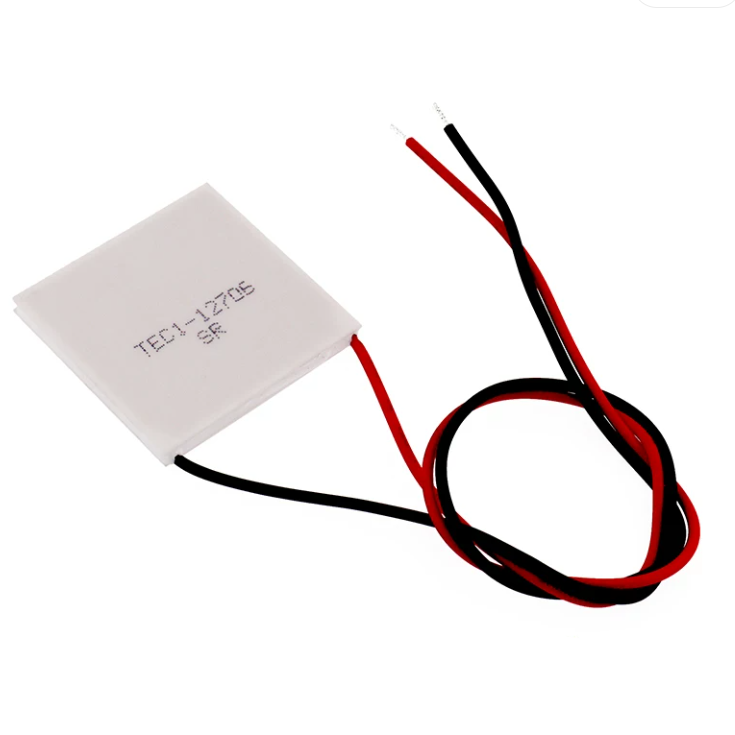
What is TEC1-12706 Peltier Module?
The TEC1 12706 is a solid-state thermoelectric device designed to transfer heat from one side of the module to the other when powered by a DC voltage. Based on the Peltier effect, it can provide efficient cooling, heating, or precise temperature control without using compressors, refrigerants, or moving parts.
Unlike traditional cooling systems, the TEC1 12706 works by actively pumping heat. When a DC current flows through the module, one surface becomes cold while the opposite side becomes hot. Reversing the polarity reverses the heating and cooling sides, making it suitable for both cooling and heating applications.
The TEC1 12706 is built with 127 highly doped P-N semiconductor couples, which improve electrical conductivity and thermal transfer efficiency. Designed for a nominal operating voltage of 12V DC and supports currents up to 6A, delivering cooling power of approximately 60W under ideal conditions.
Another unique advantage of the module is its ability to operate in reverse as a thermoelectric generator based on the Seebeck effect, where a temperature difference across the module produces electrical energy. Although not highly efficient for power generation, this feature makes it valuable for research and educational projects.
Because of its compact size, silent operation, and maintenance-free design, the peltier module widely use in electronic cooling systems, portable refrigerators, laboratory instruments, laser equipment, medical devices, beverage coolers, CPU cooling experiments, and temperature stabilization systems.
TEC1-12706 Technical Specifications
The TEC1 12706 designed for efficient thermoelectric cooling in compact electronic systems. It operates from a standard 12V DC power supply and provides reliable heat transfer for cooling, heating, and temperature control applications.
Parameter | Specification |
Module Model | TEC1-12706 |
Technology | Single-stage Thermoelectric Cooler |
Number of Couples | 127 |
External Dimensions | 40 × 40 × 3.75 mm |
Imperial Size | 1.575 × 1.575 × 0.142 in |
Nominal Voltage | 12V DC |
Maximum Voltage | 15V |
Nominal Current | 4.3–4.6A |
Maximum Current | 6A |
Starting Current | 5.8A |
Internal Resistance | 2.1–2.4Ω (23±1°C, 1kHz AC) |
Maximum Cooling Capacity | 60–72W |
Typical Cooling Capacity | 50–60W |
Maximum Temperature Difference | Above 59°C (Qc=0) |
Operating Temperature | -55°C to 83°C |
Operating Temperature (Ambient) | -22°F to 158°F |
Structure | Solid-State Thermoelectric Cooler |
TEC1-12706 Thermoelectric Cooler Key Features
Compact 40 × 40 mm Design
Use a standard 40 mm square package that easily fits into DIY electronics, laboratory equipment, portable cooling systems, and industrial temperature control devices.
Silent Operation
Since the module contains no moving mechanical components, it operates completely silently. This makes it ideal for applications requiring low noise.
No Refrigerants
Unlike compressor-based cooling systems, the TEC1 12706 requires no refrigerant gases, making it environmentally friendly and simple to integrate.
Bidirectional Heating and Cooling
Changing the polarity of the DC power supply swaps the hot and cold surfaces, allowing the same module to provide either cooling or heating.
High Reliability
The solid-state construction eliminates wear caused by moving parts, resulting in long service life with minimal maintenance.
Fast Thermal Response
The module quickly reaches its operating temperature, making it suitable for precise temperature regulation and laboratory instruments.
Compact Cooling Power
With cooling capacities up to approximately 60–72W under optimal conditions, the TEC1-12706 offers impressive cooling performance for its small size.
Easy DC Power Operation
The module operates from a standard 12V DC supply, allowing it to be powered by batteries, adapters, solar systems, or switching power supplies.
Energy Efficient for Small Systems
Although thermoelectric coolers are generally less efficient than compressor refrigeration, the TEC1 12706 provides an excellent solution for compact, localized cooling where reliability and simplicity are more important than maximum efficiency.
TEC1-12706 Pin Configuration
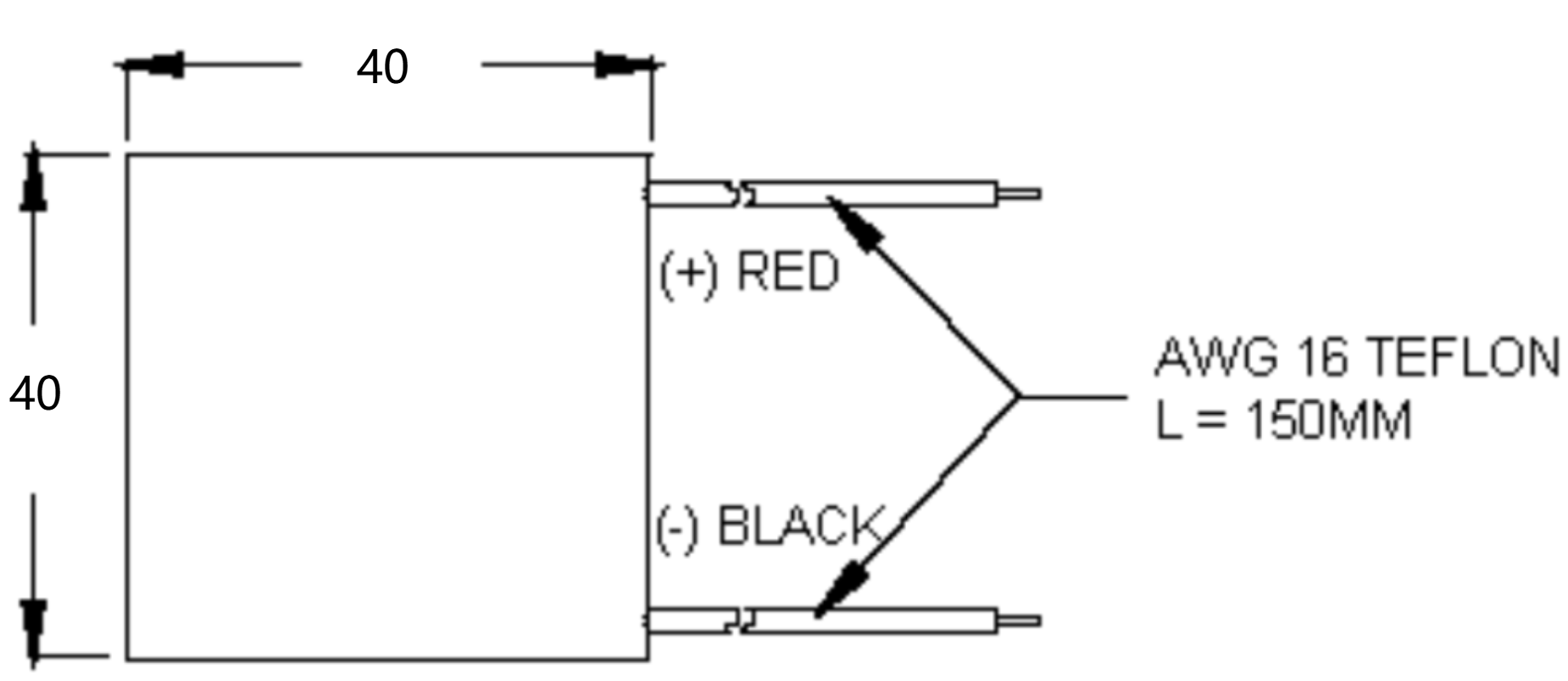
The TEC1 12706 includes two power leads:
Red Wire
Positive (+) power input.
Black Wire
Negative (-) power input.
Applying the correct polarity causes one side of the module to cool while the opposite side becomes hot. Reversing the polarity swaps the hot and cold sides.
TEC1-12706 Module Application
The cooler module is used across consumer, industrial, laboratory, and DIY electronics because of its compact size and reliable cooling performance.
CPU Cooling Experiments
Many hobbyists use the TEC1 12706 for experimental CPU and GPU cooling systems when combined with large heatsinks and water cooling.
Portable Refrigerators
Small portable refrigerators and travel coolers often use TEC1 12706 modules for silent cooling without compressors.
Electronic Component Cooling
The module cools power transistors, laser diodes, CCD cameras, sensors, and communication equipment to improve stability and extend operating life.
Water Coolers
Commonly installed inside drinking water dispensers to cool water efficiently.
Mini Beverage Coolers
Compact drink coolers use one or more TEC1-12706 modules to maintain beverages at lower temperatures.
Laboratory Equipment
Scientific instruments require precise temperature control for measurements, biological samples, and chemical testing.
Medical Equipment
Portable medical devices employ thermoelectric cooling for temperature stabilization and sample preservation.
Temperature Control Systems
Industrial controllers use TEC modules for maintaining precise operating temperatures in sensors, optics, and semiconductor equipment.
DIY Cooling Projects
Makers frequently build portable coolers, cooling boxes, climate-controlled enclosures, and experimental thermal systems using the TEC1 12706.
Educational Demonstrations
Widely use to demonstrate both the Peltier and Seebeck effects in physics and engineering education.
TEC1-12705 vs TEC1-12706
Table
Feature | TEC1-12705 | TEC1-12706 |
Semiconductor Couples | 127 | 127 |
Dimensions | 40 × 40 × 3.8 mm | 40 × 40 × 3.75 mm |
Rated Voltage | 12V DC | 12V DC |
Maximum Voltage | 15.5V | 15V |
Rated Current | 5A | 6A |
Internal Resistance | 2.4–2.7Ω | 2.1–2.4Ω |
Maximum Cooling Capacity | 45W | 60–72W |
Maximum Temperature Difference | ≥61°C | ≥59°C |
Operating Temperature | -55°C to 83°C | -55°C to 83°C |
Seal | 704 Silicone | Ceramic Encapsulation |
Typical Applications | Small Cooling Projects | Higher Cooling Performance |
Which One Should You Choose?
The TEC1-12705 consumes slightly less current and is suitable for lower-power cooling applications. The TEC1-12706 delivers noticeably higher cooling capacity, making it a better choice for CPU cooling, portable refrigerators, and applications requiring greater heat transfer.
How to Use TEC1-12706?
The TEC1 12706 is straightforward to integrate, but achieving good performance requires proper thermal design.
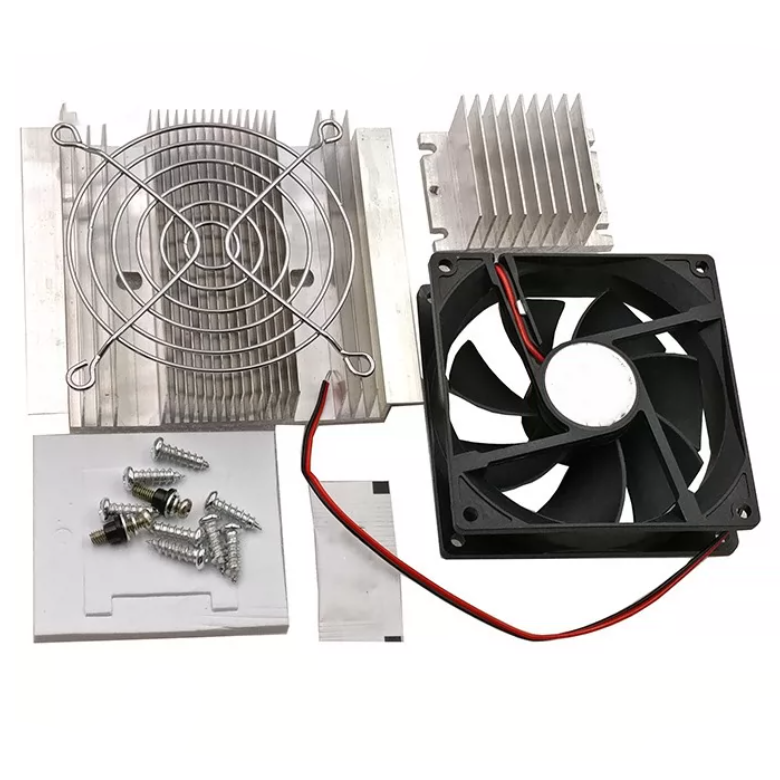
Step 1: Connect a 12V DC Power Supply
Use a stable 12V DC power source capable of supplying up to 6A. Connect the red wire to the positive terminal and the black wire to the negative terminal.
Step 2: Install a Heat Sink
Attach a large aluminum or copper heatsink to the hot side of the module. Apply thermal paste between the module and the heatsink to improve heat transfer.
Step 3: Add a Cooling Fan
Recommend a fan is highly to remove heat from the heatsink. Without active cooling, the hot side temperature rises quickly and reduces cooling performance.
Step 4: Mount the Cold Side
Place the cold side in contact with the object that needs cooling. Ensure good thermal contact using thermal grease or a suitable thermal pad.
Step 5: Reverse Polarity if Need Heating
Reversing the DC polarity changes the direction of heat flow, allowing the module to function as a heater.
Step 6: Monitor Temperature
Use a temperature sensor or controller if require precise thermal regulation. PWM or dedicated TEC controllers can improve efficiency and maintain stable temperatures.
Advantages and Limitations of the TEC1-12706
Advantages of the TEC1-12706
· No moving parts
· Silent operation
· Compact size
· Maintenance free
· Environmentally friendly
· Simple 12V operation
· Reliable long-term performance
· Supports both heating and cooling
· Suitable for precision temperature control
· Easy integration into electronic projects
Limitations of the TEC1-12706
Although highly versatile, the TEC1-12706 has some limitations.
It requires efficient heat dissipation to achieve rated performance. Without a proper heatsink, the cooling capacity drops significantly.
Thermoelectric modules are generally less energy efficient than compressor-based refrigeration systems, making them less suitable for large-scale cooling.
The maximum achievable temperature difference depends heavily on ambient temperature and thermal insulation.
Frequently Asked Questions [FAQ]
How to Choose a Cooling Peltier Module?
Select a module based on the required cooling capacity, operating voltage, current consumption, maximum temperature difference, physical dimensions, and available heatsink size. Also consider ambient temperature and power supply capability. Larger heat loads typically require higher-capacity modules or multiple Peltier devices.
What is TEC1-12706 Peltier element?
The TEC1-12706 is a single-stage thermoelectric cooler containing 127 semiconductor couples. It transfers heat using the Peltier effect when powered by a 12V DC supply, making it suitable for compact cooling, heating, and precise temperature control applications.
What is the use of TEC1-12706?
The TEC1-12706 is commonly used for CPU cooling experiments, portable refrigerators, electronic cooling, laser stabilization, laboratory equipment, water dispensers, beverage coolers, medical devices, temperature-controlled enclosures, and educational demonstrations involving thermoelectric technology.
What is the difference between TEC1-12706 and 12715?
The primary difference is the maximum operating current and cooling capacity. The TEC1-12715 supports approximately 15A, providing significantly greater cooling power than the 6A TEC1-12706. However, it requires a larger power supply and much more effective heat dissipation.
How many watts is a Peltier 12706?
The TEC1-12706 typically provides a maximum cooling capacity between 60W and 72W under ideal operating conditions. Electrical input power may exceed this value depending on voltage, current, and system efficiency, especially when operating near maximum load.
What is the price of Teci 12706?
The TEC1-12706 is an affordable thermoelectric cooling module. Depending on the manufacturer, quality, and purchase quantity, it typically costs between US$1 and US$4 for a single module, while bulk orders usually offer significantly lower pricing.
How to check if Peltier module is working?
Connect the module to a suitable 12V DC power supply with proper polarity. Within a few seconds, one side should become noticeably cold while the opposite side becomes hot. Reversing the polarity should reverse the hot and cold surfaces, confirming normal operation.
Conclusion
The TEC1-12706 Peltier Module is one of the most popular thermoelectric cooling devices available today because its compact size, quiet operation, and ease of use. Powered by a standard 12V supply, it provides reliable cooling and heating for electronics, laboratory instruments, portable refrigeration, and temperature control systems.
Although it requires effective heat dissipation to achieve optimal performance, its solid-state construction, long lifespan, and maintenance-free operation make it an excellent solution for engineers, students, makers, and hobbyists seeking efficient thermal management in compact electronic designs.
Read More:
1. DS3231 RTC Module – High Precision Real Time Clock
2. 1N4007 Diode M7 - Datasheet, Equivalent & Applications
3. 1N5819 Schottky Diode: Specifications, Features, Equivalent
HOT NEWS
TP4056 Charging Module Pinout, Working, and Applications
TP4056 Charging Module Pinout, Working, and Applications
2026-01-23
LR41 Battery Guide: Specifications, Equivalents, and Uses
LR41 Battery Specifications, Equivalents, and Uses
2025-12-14
Understanding A 0603 Resistor
0603 resistor,dimensions,marking code, values
2025-05-29
MT3608 Boost Converter - An In-Depth Guide
MT3608 Boost Converter
2025-09-04
The 0402 Resistor: A Comprehensive Guide
0402 Resistor
2025-05-06
Complete Guide to the 220 Ohm Resistor
220 Ohm Resistor
2025-07-28
What Is A 1206 Resistor?
1206 resistor dimensions,footprint,value
2025-06-05
Guide To The XL6009 Boost Converter
XL6009 Boost Converter
2025-09-05
Understanding The CD4051 Analog Multiplexer
CD4051 analog multiplexer
2025-06-30
120 Ohm Resistor- Specifications, Applications, and Features
2025-05-12